
Tile etching explained: 5 eco-friendly restoration tips
TL;DR:
- Tile etching permanently damages calcium-based natural stones like travertine and limestone.
- Proper diagnosis distinguishes etching from stains and calcium scale deposits.
- Eco-friendly prevention includes pH-neutral cleaners, sealing, and prompt spill cleanup.
If you've ever noticed dull, chalky patches on your travertine pool surround or limestone patio and assumed it was just dirt, you're not alone. Most homeowners and property managers jump straight to scrubbing, only to make things worse. The real culprit is often tile etching, a specific form of surface damage that looks deceptively similar to a stain but behaves completely differently. Understanding the distinction matters, especially outdoors and around pools, where the wrong cleaner can cause permanent damage. This guide covers what tile etching is, which surfaces are vulnerable, how to diagnose it correctly, and how to prevent and restore it using eco-friendly solutions that actually work.
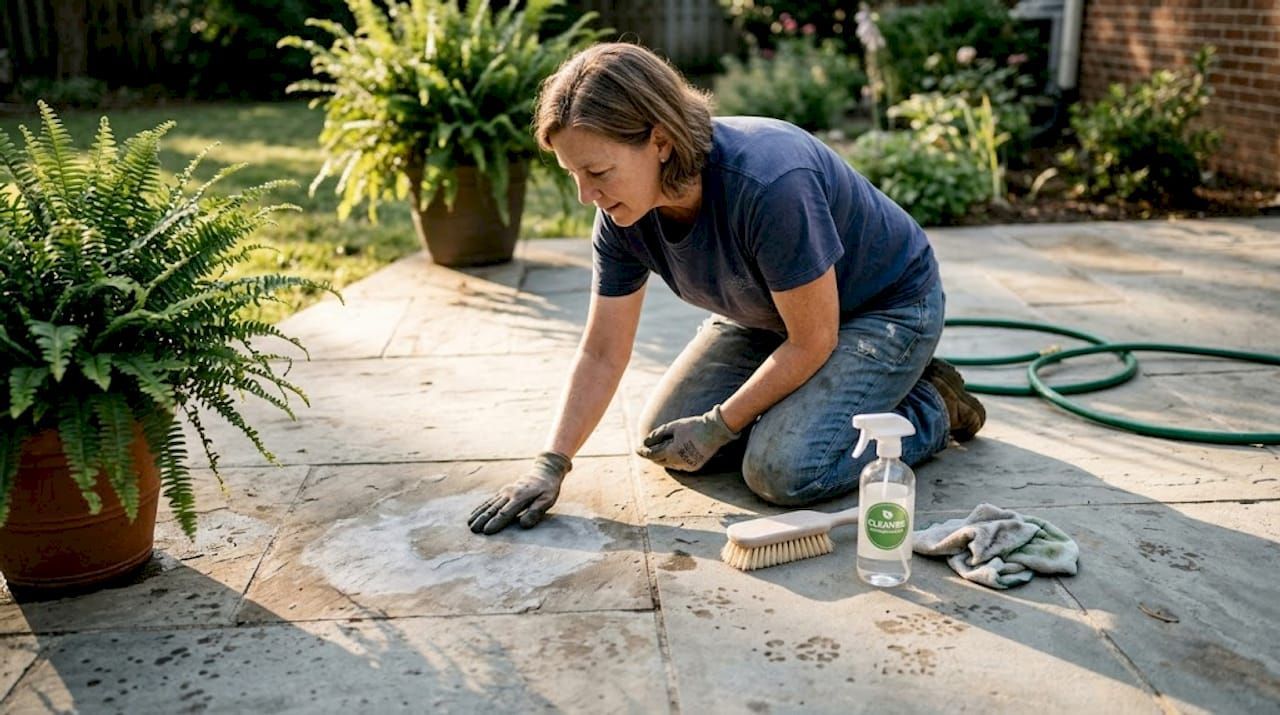
Table of Contents
- What is tile etching and what causes it?
- Which tiles, stones, and pool surfaces are vulnerable?
- How to identify etching (and what not to confuse it with)
- Eco-friendly prevention: Protecting tiles and pool surfaces
- Restoration: Eco-conscious solutions for outdoor and pool tile etching
- Expert perspective: Why prevention matters more than repair
- Eco-friendly tile cleaners and sealers: Take the next step
- Frequently asked questions
Key Takeaways
| Point | Details |
|---|---|
| Tile etching is chemical damage | Etching alters surface texture and shine, unlike stains which only change color. |
| Eco-friendly prevention is key | Using pH-neutral cleaners and quick spill response helps avoid unnecessary damage. |
| Not all tiles are at risk | Calcium-based stones like travertine and marble are vulnerable, but porcelain and granite resist etching. |
| DIY restoration has limits | Light etching can be improved with eco-friendly kits, but deep damage often needs a professional. |
| Sealers defend against stains, not etching | Sealers protect from stains but acids and bases can still etch exposed stone surfaces. |
What is tile etching and what causes it?
Tile etching is not a stain. It is a physical and chemical change to the surface of your tile, caused when an acidic or highly alkaline substance reacts with the calcium carbonate (CaCO3) in the tile. In plain terms, the surface material dissolves just enough to lose its shine, leaving a dull, rough, or cratered finish. The acid-base reaction dissolves the calcite layer, disrupting the polished crystal arrangement and resulting in visible loss of gloss and, in severe cases, pitting.
Stains, by contrast, are colorants that sit on top of or inside the pores of a tile. A stain changes the color but not the texture. Etching changes the texture and can also appear whitish or dull, which is why the two are so often confused. You can scrub a stain with the right cleaner and it lifts. You cannot scrub away etching because the surface itself has been altered.
Etching ranges in severity across four general levels:
- Level 1: Light surface haze, barely visible, only noticeable at certain angles
- Level 2: Clearly visible dullness, rough to the touch, easy to confuse with calcium scale
- Level 3: Deeper pitting, surface feels noticeably uneven, color change visible
- Level 4: Severe cratering deeper than 1/16 inch, often requiring full tile replacement
Common causes include acidic pool chemicals splashing onto stone, citrus-based cleaners, vinegar, and even acid rain. What surprises many eco-conscious homeowners is that "natural" cleaners can still cause etching. Lemon juice and white vinegar are both acidic enough to damage marble or travertine, so choosing natural does not automatically mean choosing safe for all surfaces.
Understanding the difference between tile stains vs. etching is one of the most important first steps before treating any surface damage.
"The chemistry is simple but the damage is permanent: once calcium dissolves from the surface layer, the shine cannot be restored by cleaning alone."
Which tiles, stones, and pool surfaces are vulnerable?
Not all tiles etch equally. The risk comes down to material composition. Calcium-based stones are highly vulnerable because the acid-base reaction specifically targets calcium carbonate. Non-calcium materials resist etching under most everyday conditions.
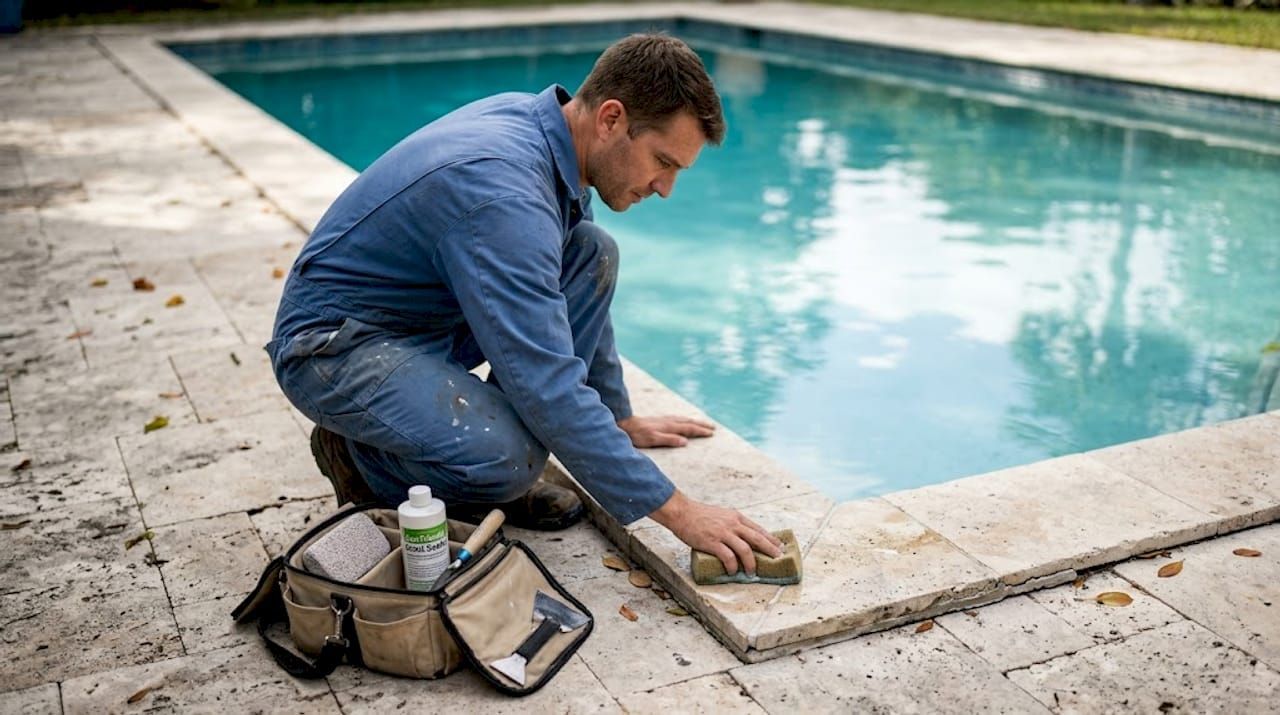
For outdoor and pool surfaces, calcium-based stones like travertine and limestone are the most vulnerable, especially when exposed to pool chemicals, acid rain, or improper cleaners. Travertine pool surrounds are particularly at risk because they combine high foot traffic with constant chemical exposure.
| Surface type | Etch risk | Key concern | Safe cleaner type |
|---|---|---|---|
| Marble | Very high | Acids, alkaline cleaners | pH-neutral only |
| Travertine | Very high | Pool chemicals, acid rain | pH-neutral only |
| Limestone | High | Outdoor weather, cleaners | pH-neutral only |
| Slate | Low to moderate | Acidic cleaners over time | Mild pH-neutral |
| Granite | Low | Resistant to most chemicals | pH-neutral or mild acid |
| Porcelain | Very low | Nearly etch-proof | Most safe cleaners |
Environmental factors play a major role in outdoor settings. Acid rain, which has a pH as low as 4.2 in some urban areas, can slowly etch unprotected limestone or travertine over seasons. Pool water that is not properly balanced, particularly water with a low pH or high chlorine concentration, speeds up surface degradation on surrounding stone tiles.
Key risk factors for outdoor and pool tile etching:
- Splashing pool water with pH below 7.2
- Using acid-based degreasers or rust removers near stone
- Leaving citrus food or drink spills on stone patio surfaces
- Pressure washing with the wrong chemical additives
- Applying cleaners designed for porcelain to natural stone
If you have a travertine or limestone pool surround and you want to explore restoring pool tile safely, material type must inform every product choice you make.
How to identify etching (and what not to confuse it with)
Once you know which tiles are at risk, it is essential to diagnose the problem correctly before addressing it. The most common diagnostic mistake is treating etching as calcium scale, or confusing it with a deep stain.
Here is a simple four-step method to identify etching:
- Touch the surface. Etching feels dull, chalky, or rough even when clean. A stain feels smooth because it is only a color change.
- Look at the angle. Tilt a flashlight across the surface. Etching shows up as a matte or frosted patch. Stains show up as darker or discolored areas.
- Check for calcium scale. White deposits that are gritty or crusty and sit above the tile surface are scale, not etching. Scale is a mineral buildup, not surface damage.
- Try a water drop test. Water beads on sealed surfaces. If it soaks in quickly on a light patch, you may have etching combined with sealer loss.
Calcium scale around pools is a deposit that forms when water chemistry is out of balance. It looks white and feels rough. Here is the critical warning: sealers block stains not etching, and using an acid-based scale remover on calcium-based stone to remove scale can actually cause etching while solving the scale problem. This is why the diagnosis must happen before the treatment.
Pro Tip: Never use acid-based cleaners on marble, travertine, or limestone to remove calcium scale. Use a non-acid calcium remover specifically formulated for natural stone, like those covered in our guide on different pool tile cleaners.
For a practical comparison of approaches to mineral deposits, the guide on calcium removal vs. etch repair breaks down how to treat each problem without making the other one worse.
Eco-friendly prevention: Protecting tiles and pool surfaces
Recognizing etching is only half the battle. Here is how to keep it from happening in the first place, without harming the environment.
The single most important daily habit is using a pH-neutral cleaner, rated between 7 and 9, for all routine cleaning of natural stone. pH-neutral cleaners for daily use protect tile surfaces while avoiding the chemical reaction that causes etching. Avoid vinegar and lemon juice entirely on calcium-based tiles, even diluted, even "just this once."
Eco-friendly prevention habits that work:
- Wipe up spills from food, drinks, or pool water within minutes, not hours
- Use outdoor mats near dining areas to reduce contact with food acids
- Reseal natural stone tiles every 1 to 2 years, especially in outdoor and pool environments
- Monitor pool water chemistry monthly and keep pH between 7.4 and 7.6
- Avoid letting pool water sit on stone surrounds after splashing by rinsing with fresh water
Pro Tip: For calcium scale specifically, non-toxic options like citric acid or pumice stone can be used carefully and only on non-calcium surfaces like porcelain. For stone, always choose a purpose-formulated non-acid calcium remover. Hard water is also a major contributor, and hard water stain prevention starts with addressing the water source, not just the tile.
For a full approach to sustainable tile care, our guides on eco-friendly pool maintenance and stone sealer sustainability give practical product recommendations that protect both your tiles and the environment around your pool.
Restoration: Eco-conscious solutions for outdoor and pool tile etching
If your tiles are already etched, do not panic. There are eco-conscious ways to restore their look and feel safely, though results depend on severity.
- Light etching (Level 1 to 2): Apply an eco-friendly polishing cream or marble polishing powder with a soft cloth. Work in circular motions and buff out. This method restores roughly 60 to 70% of the original gloss and is safe for most natural stone surfaces.
- Moderate etching (Level 2 to 3): Use a diamond polishing pad kit, starting at 400 grit and working up to 3000 grit. Wet the surface before each pass. This approach can restore 75 to 85% of original appearance. Always test a small, hidden area first.
- Severe etching (Level 3 to 4): Professional honing and polishing is required. A professional can restore 95% or more of the original surface, but this is the most resource-intensive option.
"Restoration methodologies: light etching responds to polishing powder or cream; moderate etching requires diamond pads; severe cases need professional honing. None of these are reversible by cleaning alone."
Important: restoration physically removes a thin layer of the tile surface to reveal undamaged material beneath. This works, but it is a finite resource. Each restoration thins the tile slightly. Doing it once to recover from an accident is practical. Doing it repeatedly because prevention steps were skipped is a slow path to tile replacement.
For ongoing maintenance after restoration, explore the full range of tile restoration products designed for sustainable surface care.
Expert perspective: Why prevention matters more than repair
Most articles on tile etching focus heavily on restoration kits and polishing pads. We want to say something different: restoration, even when done well with eco-friendly tools, is always a compromise.
Every polishing session removes surface material. Over years, even professionally restored tiles become thinner, less resilient, and more prone to damage. The surfaces you are working so hard to restore are literally getting smaller each time. That is not a sustainable cycle for your property or the environment.
The homeowners and property managers who maintain the most beautiful outdoor spaces are not the ones with the best restoration routines. They are the ones who never needed to restore in the first place. They use preventing tile issues as their primary strategy, pH-neutral cleaners as their daily tools, and proper sealing as their annual ritual.
The cost comparison is stark. A bottle of eco-friendly pH-neutral cleaner and an annual sealing session cost a fraction of a professional restoration. And prevention does not carry the risk of over-polishing or applying the wrong product. We think the industry underestimates how much damage is done by well-meaning homeowners who skip prevention and then over-correct with aggressive restoration products. Protecting your tiles proactively is the most eco-conscious and cost-effective choice you can make.
Eco-friendly tile cleaners and sealers: Take the next step
If you are ready to put eco-friendly prevention and restoration into action, the right products make all the difference. Whether you are maintaining a travertine pool surround, a limestone patio, or a tiled outdoor kitchen, the foundation is always the same: clean safely, seal regularly, and choose products that protect both your surfaces and the environment.
At Oceancare, we have curated a full selection of plant-based, biodegradable, and low-VOC solutions for exactly these needs. Start with our eco-friendly cleaning essentials to build a sustainable daily routine. For routine surface care, our pH-neutral tile cleaner is formulated specifically for natural stone and pool tile, safe for calcium-based surfaces, and tough enough to handle outdoor grime without any risk of etching.
Frequently asked questions
Can you reverse tile etching completely at home?
Light to moderate etching on stone tiles can often be improved at home with polishing kits, achieving 60 to 85% gloss restoration, but deep etching requires professional honing for results above 95%.
What household cleaners cause tile etching?
Acidic cleaners like vinegar and lemon juice, along with highly alkaline products, can etch calcium-based tiles such as marble, travertine, and limestone with repeated use.
How do I prevent outdoor tile etching around my pool?
Use pH-neutral cleaners, keep pool water pH balanced between 7.4 and 7.6, reseal stone tiles annually, and rinse pool splashes off stone surrounds promptly with fresh water.
Are porcelain or granite tiles resistant to etching?
Yes, non-calcium tiles like porcelain and granite are highly resistant to etching because they do not contain the calcium carbonate that reacts with acids or alkaline substances.
Does sealing outdoor tiles prevent etching?
No. Sealers block stains by filling surface pores, but they do not stop the chemical reaction that causes etching from acids or alkaline cleaners on calcium-based stone.
Recommended
- How to Prevent Tile Stains Naturally (Eco-Friendly)
- Tile Maintenance: Protecting Surfaces and Environment
- Eco-Friendly Grout Cleaning Guide for Safe Surface Care
- Step by Step Grout Cleaning for Lasting Results
- Hardwood Floor Restoration Explained: Eco-Friendly Solutions
- Eco-friendly paint: sustainable choices for Melbourne heritage homes

