
The Role of Sealers in Home Care: Your 2026 Guide
TL;DR:
- Sealants serve a protective role by preventing moisture, stains, and chemicals from damaging porous surfaces in homes.
- Choosing the correct sealer type—penetrating or film-forming—is essential for optimal durability and appearance.
Most homeowners think of sealers as a finishing touch, something to make tile shine or stone look polished. That framing costs them money. The real role of sealers in home care is protective, not decorative. They block moisture from eating into concrete driveways, stop cooking oils from penetrating granite countertops, and keep pool tile grout from crumbling under constant chemical exposure. This guide cuts through the confusion on sealer types for home care, how to apply them correctly, when to reapply, and which environmental factors should shape your choices in 2026.

Table of Contents
- Key takeaways
- The role of sealers in home care explained
- Sealer types for home care and what they actually do
- How to apply and maintain sealers correctly
- Do sealers prevent damage? What the evidence says
- Environmental and health considerations when choosing sealers
- My honest take on sealers after years of surface care
- Protect your surfaces with Oceancarestore's eco-friendly products
- FAQ
Key takeaways
| Point | Details |
|---|---|
| Sealers protect, not just beautify | Sealers block moisture, chemicals, and stains from penetrating porous surfaces in your home. |
| Match sealer type to surface | Penetrating sealers suit natural stone and concrete; film-forming sealers work better on decorative surfaces needing visual enhancement. |
| Reapplication frequency matters | Silane sealers last 5 to 10 years while acrylic sealers need renewal every 1 to 3 years. |
| Eco-friendly options are now standard | Water-based, low-VOC formulas protect indoor air quality without sacrificing performance. |
| Regular sealing reduces long-term costs | Sealing prevents expensive surface repairs and preserves property value over time. |
The role of sealers in home care explained
Sealers are liquid treatments applied to porous surfaces to reduce or eliminate how much moisture, oil, stain, or chemical penetrates the material. They are not primers, which prepare a surface for paint. They are not topcoats or finishes, which exist solely for appearance. Sealers sit in their own category: surface protection that works at the substrate level.
Most building materials used in homes are porous. Concrete, natural stone, grout, unglazed tile, and wood all have microscopic openings that absorb whatever comes in contact with them. Without sealing, water works its way in, freezes and expands in winter, and breaks the material from the inside. Stains from oils, wine, or minerals absorb permanently into unprotected grout. Chemical cleaners used repeatedly without a protective barrier gradually erode stone surfaces.
There are two main sealer categories, and the difference is fundamental:
- Penetrating sealers absorb into the surface and chemically bond with the material. Penetrating sealers are invisible and do not change how the surface looks, which makes them the go-to choice for natural stone and exterior concrete where appearance must stay natural.
- Film-forming sealers sit on top of the surface and create a physical coating. They offer visible coatings with abrasion and chemical resistance and range from matte to high-gloss finishes, making them popular for decorative concrete floors and pool decks.
Common surfaces sealed in homes include concrete driveways and patios, granite and marble countertops, ceramic and porcelain tile grout, natural stone showers, and exterior pavers. Each of these absorbs damage differently, which is exactly why the sealer you choose matters as much as whether you seal at all.
Pro Tip: Before applying any sealer, confirm the surface is fully dry and clean. Any moisture or debris trapped under a sealer will cause cloudiness, poor adhesion, or peeling within weeks.
Sealer types for home care and what they actually do
Choosing among sealer types for home care is not about picking the most expensive product. It is about matching chemistry to your specific surface and environment.
Penetrating sealers come in silane, siloxane, and silicone formulas. Silane molecules are small enough to penetrate deeply into dense stone and concrete. Siloxane molecules are larger and work better on rougher, more open surfaces like brick or split-face stone. Silicone sealants remain flexible and water resistant, which is why they are the preferred choice around bathroom fixtures and exterior joints where movement occurs. Each chemistry has a distinct purpose, and confusing them leads to visible failures.
Film-forming sealers include acrylic, epoxy, and polyurethane options:
- Acrylic sealers are the most common for homeowners. They are affordable, easy to apply, and enhance color and gloss, but they need reapplication every 1 to 3 years.
- Epoxy sealers provide excellent chemical resistance, making them well-suited for garage floors and kitchen surfaces that see heavy use.
- Polyurethane sealers offer superior abrasion resistance and are often used on hardwood floors or high-traffic tile areas.
One of the most significant market shifts underway is toward water-based formulas. The residential sealer market is growing at 6.78% CAGR, largely driven by demand for eco-friendly, low-VOC options that comply with tighter environmental regulations. Water-based sealers are favored for low VOC emissions, which makes them the practical choice for interior spaces like kitchens, bathrooms, and living areas where ventilation is limited.
The table below gives you a side-by-side view of the most common sealer types:
| Sealer type | Best surfaces | Durability | Finish |
|---|---|---|---|
| Silane/Siloxane penetrating | Concrete, natural stone, brick | 5 to 10 years | Invisible |
| Acrylic film-forming | Pavers, decorative concrete | 1 to 3 years | Matte to gloss |
| Epoxy | Garage floors, kitchens | 3 to 5 years | High gloss |
| Polyurethane | Hardwood, high-traffic tile | 3 to 7 years | Satin to gloss |
| Silicone | Joints, bathroom fixtures | 5 to 10 years | Clear/flexible |
Pro Tip: For natural stone in kitchens or bathrooms, choose a penetrating silane sealer. These protect without altering the look of the stone, which matters on expensive materials like travertine or slate.
If you are evaluating eco-friendly sealers for stone and tile, plant-based and biodegradable formulas have matured significantly and now perform comparably to solvent-based alternatives for most residential applications.
How to apply and maintain sealers correctly
Applying a sealer the wrong way can cause more damage than not sealing at all. Here is a step-by-step approach that covers what most guides skip:
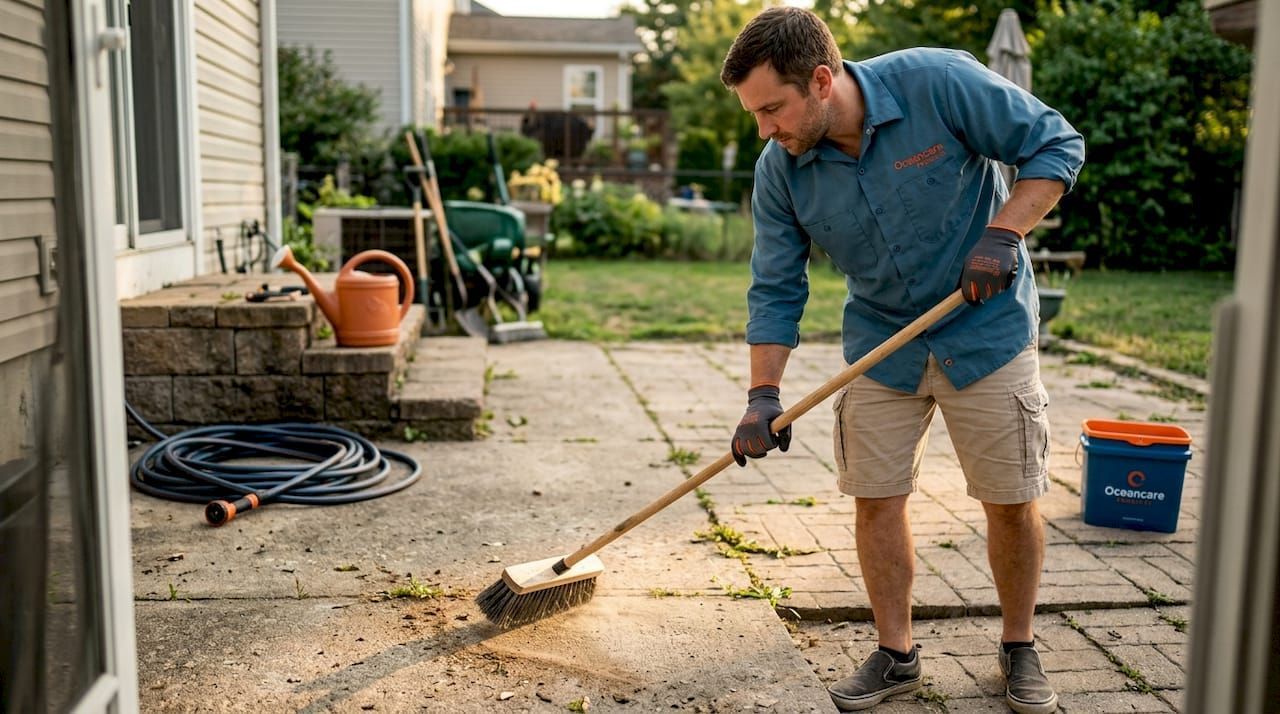
- Clean the surface completely. Remove all grease, grime, old sealer residue, and mineral deposits before you start. Sealing over contamination traps the problem under the protective layer.
- Let the surface dry fully. Moisture trapped under a sealer is the number one cause of white haze and delamination.
- Test in a small area first. Apply a small amount and let it cure for 24 hours. Check adhesion, appearance, and any reaction before committing to the full surface.
- Apply during cooler parts of the day. Applying sealer mid-day causes evaporation, producing hazy or peeling finishes. Morning or late afternoon applications are recommended for proper penetration.
- Apply thin, even coats. Thick applications do not cure correctly and can peel or bubble. Two thin coats almost always outperform one heavy coat.
- Allow full cure time. Foot traffic and cleaning should wait at least 24 to 48 hours, depending on the formula.
For ongoing sealers maintenance, a few habits make a significant difference:
- Use pH-neutral cleaners on sealed surfaces. Harsh acids or alkalis break down sealer chemistry faster than normal wear.
- Avoid abrasive scrubbing pads on film-forming sealers. These scratch the coating and create entry points for moisture.
- Watch for visual signs that a sealer needs refreshing: water no longer beads on the surface, staining appears more easily, or the surface looks dull and worn.
- For exterior surfaces, inspect after winter. Freeze-thaw cycles stress any sealer and often signal when reapplication is needed.
For exterior concrete and pavers, partnering with a professional service for periodic exterior concrete resealing adds value when the scope goes beyond a standard DIY job.
Do sealers prevent damage? What the evidence says
Yes, sealers prevent damage in concrete, measurable ways. The types of damage they stop include:
- Moisture ingress : Water absorbed into concrete or stone causes cracking, spalling, and freeze-thaw damage over time.
- Staining : Unsealed granite countertops absorb oil and liquid stains within minutes. Sealed surfaces give you time to wipe up spills.
- Chemical damage : Pool chemicals, cleaning products, and road salts penetrate unsealed tile and grout and break them down at the molecular level.
- UV degradation : Exterior sealers with UV inhibitors prevent discoloration and surface breakdown from sun exposure.
Regular sealing extends surface life and reduces staining and repair costs, which translates directly to retained property value. A granite countertop that costs several thousand dollars to install can be protected for years with a sealer that costs under fifty dollars and thirty minutes of time.
"Sealers provide economic savings over time by reducing surface damage and costly repairs, a key consideration for property managers." — Granite countertop maintenance source
Sealed surfaces are also simpler to clean. Because contaminants sit on top of the sealer rather than absorbing into the material, routine cleaning becomes faster and requires less chemical intervention. For property managers responsible for multiple units, that efficiency adds up quickly across hundreds of square feet of tile, stone, and concrete.
The protective role of sealers on pool tile and stone is especially clear in pool environments, where constant chemical exposure, calcium buildup, and moisture create some of the harshest conditions any surface faces.
Environmental and health considerations when choosing sealers
Why use sealers in home care and not just rely on cleaning? Because prevention costs less than restoration, and the best modern sealers do it without compromising indoor air quality or environmental safety.
Solvent-based sealers have historically dominated the market, but they carry meaningful drawbacks. They release volatile organic compounds during and after application, creating respiratory irritation and indoor air quality problems. Low-VOC formulations are valued for indoor comfort and reduced odors, especially in occupied homes where full ventilation is not always possible.
Key considerations when choosing a sealer with your household's health in mind:
- Choose water-based formulas for indoor applications . They dry faster, smell less, and introduce far fewer toxins into the home.
- Look for biodegradable or plant-based options . These formulas have improved enough that performance is rarely a reason to choose a solvent-based product for residential use.
- Check for third-party certifications like low-VOC compliance labels, which confirm the product meets established safety standards.
- Dispose of sealer residue properly . Even eco-friendly sealers should not be poured down drains. Check local disposal guidelines.
For a deeper look at how non-toxic formulas compare to conventional options, the Oceancarestore guide on non-toxic sealers for safer surfaces breaks down specific ingredient categories and what to look for on product labels.
Pro Tip: If you are sealing in a bathroom or kitchen that cannot be fully ventilated, always choose a water-based, low-VOC sealer. The performance difference compared to solvent-based products is minimal in residential applications, but the air quality benefit is significant.
My honest take on sealers after years of surface care
I have talked with hundreds of homeowners who only learned how important sealers were after a surface failed. A cracked travertine shower floor, a stained granite island, grout that crumbled after one winter outdoors. In almost every case, the fix cost ten to twenty times more than sealing would have.
What surprises most people is not that sealers work. It is how badly a wrong sealer choice can backfire. I have seen film-forming acrylics applied to pool stone that was still damp. The result was a milky white coating that had to be stripped with an aggressive cleaner before starting over. Proper seal selection must match substrate and environmental conditions to avoid failures like delamination or whitening, and that rule is not just theoretical.
My practical advice: read the substrate first, then choose the chemistry. Do not buy a sealer because it says "stone sealer" on the label. Find out whether the stone is dense or porous, whether the surface is interior or exterior, and whether appearance should stay natural or get enhanced. That thirty seconds of thinking prevents hours of remediation work.
The frequency question trips people up too. Most homeowners overseal decorative concrete or underseal natural stone. The best practice is to test by placing a few drops of water on the surface. If they absorb within a few minutes, it is time to reseal. If they bead up, the sealer is still doing its job.
Protect your surfaces with Oceancarestore's eco-friendly products
Oceancarestore offers a line of sealers, cleaners, and surface protectants built specifically for the surfaces discussed throughout this article. Every product in the Oceancarestore range is formulated with low VOC, plant-based, or biodegradable ingredients, making them safe for families, pets, and sensitive surfaces.
For day-to-day maintenance between sealings, the pH-neutral tile and stone cleaner is designed to clean sealed surfaces without stripping or degrading the protective layer you have worked to maintain. For surfaces that have accumulated mineral buildup or grime before resealing, the intensive stone cleaner concentrate restores the substrate without damaging adjacent grout or natural stone. Browse the full product range at Oceancarestore, or use the site's surface-specific filters to match the right product to your exact material and application. The customer support team can also help you identify the correct sealer and cleaner pairing for any surface in your home.
FAQ
What does a sealer actually do on home surfaces?
A sealer penetrates or coats a porous surface to block moisture, staining agents, and chemicals from absorbing into the material. The result is a surface that resists damage, cleans more easily, and lasts longer.
How often should I reseal stone or tile surfaces?
It depends on the sealer type. Penetrating silane sealers typically last 5 to 10 years, while acrylic film-forming sealers need renewal every 1 to 3 years. A quick water bead test tells you when it is time.
Are water-based sealers as effective as solvent-based ones?
For most residential applications, yes. Water-based sealers offer comparable protection with significantly lower VOC emissions, making them the better choice for interior spaces and households with children or pets.
Can I apply sealer myself or do I need a professional?
Most penetrating sealers are designed for DIY application on standard surfaces. Complex areas, large exterior projects, or surfaces requiring stripping of old coatings benefit from professional application to avoid failures.
Do sealers prevent all types of damage?
Sealers significantly reduce moisture, staining, and chemical damage, but they are not permanent or universal. They need periodic reapplication and work best when paired with compatible, pH-neutral cleaning products.

