
Sealer Compatibility with Natural Stone: A Homeowner's Guide
TL;DR:
- Sealer compatibility with natural stone depends on matching the sealer's chemistry and physical properties with the stone's pore structure and mineral composition. Using the wrong sealer can cause moisture trapping, surface clouding, or damage, especially if applied incorrectly or on incompatible stone types. Proper selection, application, and maintenance extend the protection and appearance of natural stone surfaces.
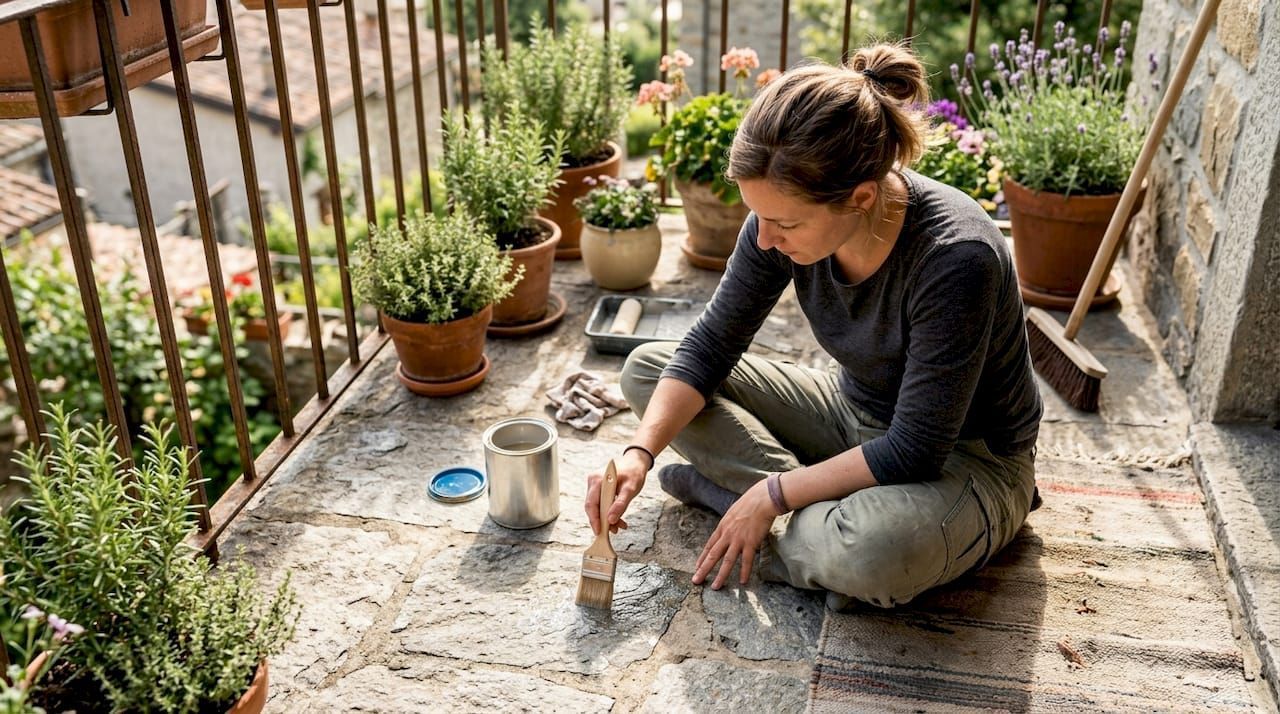
Sealer compatibility with natural stone is defined as the match between a sealer's chemistry and physical properties and the stone's pore structure, mineral composition, and intended use environment. Choosing the wrong sealer does not just waste money. It can trap moisture, cloud the surface, or leave your stone with less protection than it had before. The two fundamental sealer categories, penetrating and topical, behave very differently on marble, granite, limestone, and travertine. Getting this match right is the single most important decision in any natural stone care routine.
What is sealer compatibility with natural stone, and why does it matter?
Sealer compatibility means a product can physically enter the stone's pores, bond with its mineral structure, and perform its protective function without altering the stone's appearance or chemistry. A sealer that cannot penetrate deep enough offers surface-level protection at best. One that reacts with the stone's minerals can cause discoloration or haze that is difficult to reverse.
Natural stone falls into two broad groups based on porosity. Porous stones like marble, limestone, and travertine absorb liquids quickly. Dense stones like granite and quartzite resist absorption. Each group needs a different sealer approach, and using the same product on both is a common and costly mistake.
The industry standard term for the most widely used sealer type is "impregnating sealer," also called a penetrating sealer. Penetrating sealers are the standard for over 90% of residential natural stone countertops and floors. They soak into the pores and create an invisible barrier without changing how the stone looks.
What are the main types of natural stone sealers and how do they differ?
The two primary categories are penetrating sealers and topical sealers. Understanding what each one does, and where each one fails, is the foundation of any good sealer compatibility guide.
Penetrating sealers
Penetrating sealers soak below the surface and chemically bond inside the stone's pores. High-quality impregnating sealers gain superior resistance to water and oil by bonding within the pores rather than sitting on top. They do not change the stone's color or sheen. On granite, they typically last 3–5 years before resealing is needed.
Topical sealers
Topical sealers sit on the stone's surface and create a physical film. They can add gloss or a wet look, which appeals to some homeowners. The tradeoff is significant: topical sealers last only 1–2 years and carry real risks of peeling and hazing. Applying a topical sealer over damp stone traps moisture, causing haze, peeling, or staining under the surface. This makes topical sealers unsuitable for most countertops and showers.
| Feature | Penetrating sealer | Topical sealer |
|---|---|---|
| Where it works | Inside stone pores | On the surface |
| Appearance change | None | Adds gloss or sheen |
| Lifespan | 3–5 years | 1–2 years |
| Risk of haze or peel | Very low | High if applied incorrectly |
| Best use | Countertops, floors, showers | Decorative outdoor pavers only |
Pro Tip: Never apply a topical sealer over polished marble or honed limestone. The film traps moisture and dulls the finish over time. Stick with a penetrating impregnating sealer for any stone in a wet or high-use area.
How does stone porosity and chemistry affect sealer compatibility?
Stone porosity is the single biggest factor in sealer selection. Porosity determines how fast a sealer absorbs, how deeply it penetrates, and how often you need to reapply it.
Porous stones like limestone, travertine, and marble require sealing every 6–12 months to 2 years depending on use. Their open pore structure absorbs liquids fast, which means stains set quickly too. A sealer with larger molecules works well here because the pores are wide enough to accept them.
Dense stones like granite and quartzite are the opposite. Their tight pore structure means matching sealer molecular size to pore size is critical. Smaller molecules are necessary for dense stones because larger ones cannot penetrate far enough to bond. Many homeowners over-seal dense granites, which causes residue buildup and surface haze rather than better protection.
Stone chemistry adds another layer of complexity. Calcite-based stones like marble and limestone are acid-sensitive. Spilled lemon juice, wine, or vinegar reacts with the calcite and etches the surface. This is a chemical reaction, not a staining event. No penetrating sealer prevents acid etching on calcite-based stones. Sealers protect against staining, not etching. Knowing this distinction saves homeowners from disappointment and misplaced blame on a perfectly good sealer.
Pro Tip: If you have marble countertops in the kitchen, pair a quality penetrating sealer with a strict spill cleanup habit. Wipe acidic spills within minutes. The sealer buys you time; your response time determines the outcome.
For a deeper look at why acid cleaners harm stone, the chemistry behind etching is worth understanding before you choose any cleaning product.
What are water-based vs solvent-based sealers and which should you use?
The carrier in a sealer, water or solvent, affects how deeply it penetrates, how safe it is to apply indoors, and how well it performs on specific stone types. This choice matters as much as the sealer chemistry itself.
Water-based sealers have lower VOCs and odor, making them the preferred choice for indoor residential use, especially in homes with children, pets, or sensitive occupants. They are easier to apply and clean up. The tradeoff is that water-based carriers do not penetrate as deeply into dense stones, which can reduce long-term protection in high-use kitchens.
Solvent-based sealers penetrate deeper and perform better on dense stones and high-traffic areas. They suit busy kitchen countertops and outdoor stone better than water-based options. The downside is stronger odor and the need for ventilation during and after application. Applying a solvent-based sealer in a closed bathroom without airflow is a health risk, not just an inconvenience.
| Factor | Water-based sealer | Solvent-based sealer |
|---|---|---|
| VOC level | Low | Higher |
| Indoor safety | High | Requires ventilation |
| Penetration depth | Moderate | Deep |
| Best stone match | Porous stones indoors | Dense stones, outdoor use |
| Cleanup | Water and soap | Solvent required |
For homeowners working on kitchen and bathroom stone surfaces, the water-based option is the practical default for most indoor applications. Switch to solvent-based only when the stone is dense and the space has proper ventilation.
Fluoropolymer-based sealers offer the best oil and water repellency for kitchen countertops exposed to cooking splatter. They are available in both water-based and solvent-based formulations, giving you flexibility without sacrificing performance.
How to ensure long-term compatibility and proper care of sealed natural stone
Sealing stone once is not a permanent solution. Long-term protection depends on surface preparation, correct application, and a consistent maintenance routine.
- Prepare the surface. Clean the stone thoroughly and let it dry completely before applying any sealer. Moisture trapped under a sealer causes haze and reduces bonding. For porous stones, allow at least 24 hours of drying time after cleaning.
- Apply the sealer correctly. Follow the product instructions for dwell time and coverage. Apply in thin, even coats. Do not flood the surface.
- Remove excess sealer immediately. Dense stones like black granite or quartzite absorb little sealer and risk residue haze if excess is not wiped off before it dries. Buff the surface with a clean cloth within the time window specified on the product label.
- Test with the water drop method. The water drop test is the most practical way to know when resealing is needed. Place a few drops of water on the stone. If the water beads up, the sealer is still working. If it absorbs quickly and darkens the stone, resealing is due.
- Reseal on schedule. Porous stones like travertine and limestone need resealing every 6–12 months in kitchens. Granite in a low-use bathroom may go 3 years between applications. Adjust your schedule based on the stone type and how hard the surface works.
Pro Tip: Professional-grade sealers contain higher concentrations of active ingredients than consumer products. Professional sealers often provide 3–5 years of protection compared to shorter durations from standard consumer options. Spending more upfront on a professional-grade product usually costs less over time.
Sealers primarily buy time for spill cleanup. Your response habits matter as much as the sealer you choose. A great sealer on a neglected surface still fails. Pair your sealer with eco-friendly stone maintenance habits to get the full lifespan from every application.
Key Takeaways
Sealer compatibility with natural stone requires matching the sealer's molecular size, carrier type, and chemistry to the stone's porosity, mineral composition, and use environment.
| Point | Details |
|---|---|
| Penetrating sealers are the standard | They bond inside stone pores, last 3–5 years, and do not alter appearance. |
| Porosity drives sealer choice | Porous stones need frequent resealing; dense stones need small-molecule formulas. |
| Sealers do not stop etching | Acid etching on marble is a chemical reaction that no sealer can prevent. |
| Water-based suits most indoor use | Lower VOCs and safer application make water-based sealers the default for homes. |
| Test and reseal on schedule | The water drop test tells you when protection has faded and resealing is needed. |
What I've learned from watching homeowners get this wrong
The most common mistake I see is treating sealer selection as an afterthought. A homeowner installs beautiful Carrara marble, grabs the first sealer on the shelf, and applies it without checking porosity or carrier type. Six months later, they are frustrated by etching and assume the sealer failed. It did not fail. It was never the right tool for that job.
The second mistake is over-sealing dense granite. Granite in a low-traffic bathroom does not need resealing every year. Applying sealer too often on a dense stone leaves a residue film that dulls the surface and is genuinely difficult to remove. Less is more with dense stones.
My honest view is that topical sealers have almost no place on residential natural stone indoors. The glossy finish looks appealing in a showroom. In a real kitchen or bathroom, it peels, hazes, and traps moisture within a year. The penetrating impregnating sealer is not glamorous, but it is the right answer for nearly every indoor stone surface.
Sealers are not a substitute for good habits. They buy you time when a glass of red wine tips over or olive oil splashes from the pan. That window might be 10 minutes or 30 minutes depending on the sealer quality and stone porosity. What you do in that window determines whether you get a stain or a clean surface. Match your sealer to your stone, test it regularly, and treat spills immediately. That combination outperforms any single product decision.
Oceancarestore's stone and grout sealers for every surface
Choosing the right sealer is straightforward when you have products designed specifically for natural stone compatibility. Oceancarestore carries a range of professional-grade stone and grout sealers formulated for the full spectrum of residential stone types, from porous travertine and marble to dense granite and quartzite.
Each product in the Oceancarestore range is low VOC and safe for indoor use, with formulations that match both water-based and penetrating sealer needs. If you are unsure which product fits your stone type and environment, the Oceancarestore team can help you match the right sealer to your surface. You can also review common sealer problems to understand what to avoid before you apply. Protecting your stone investment starts with the right product, applied correctly, from a source that specializes in surface care.
FAQ
What is sealer compatibility with natural stone?
Sealer compatibility refers to how well a sealer's chemistry, molecular size, and carrier match the stone's porosity and mineral structure. A compatible sealer penetrates properly, bonds within the pores, and protects without altering the stone's appearance.
How often should I reseal natural stone?
Porous stones like marble and travertine need resealing every 6–12 months in high-use areas. Dense stones like granite typically need resealing every 1–3 years. Use the water drop test to confirm when protection has faded.
Does sealer protect marble from etching?
No. Sealers protect natural stone from staining, not from acid etching. Etching on marble is a chemical reaction between acid and calcite that no penetrating sealer can stop. Immediate spill cleanup is the only effective defense.
What is the difference between water-based and solvent-based stone sealers?
Water-based sealers have lower VOCs and are safer for indoor use. Solvent-based sealers penetrate deeper and perform better on dense stones and high-traffic surfaces but require ventilation during application.
Can I use the same sealer on granite and marble?
Not always. Granite is dense and needs a small-molecule sealer with less frequent reapplication. Marble is porous and needs a deeply penetrating sealer reapplied more often. Using the same product on both usually means one surface is under-protected.

