
Saltwater Tile Scale? Weekly Brushing and Eco Spot Care for Homeowners
The safest effective way to handle saltwater pool tile scale is to test and balance your water chemistry, start with nonabrasive mechanical cleaning, and use targeted mild acid or citric spot treatments only when necessary. Test first and wear proper protective gear before touching anything stronger than a brush. Understanding the Langelier Saturation Index and following an eco-friendly maintenance routine can help keep those deposits from coming back.
TL;DR:
- Proper water chemistry testing and balancing, especially pH and calcium hardness, are essential before cleaning to prevent rapid scale reformation.
- Mechanical cleaning with a nylon brush and rinsing removes light scale and biofilm without damaging surfaces, reducing the need for chemical treatments.
- Use diluted citric acid or non-abrasive cleaners on stubborn scale, but avoid acid on natural stone, glass, or polished surfaces to prevent etching.
- Managing the Langelier Saturation Index with high-purity salt and sequestering agents helps prevent calcium buildup and reduces long-term maintenance.
- Regular weekly brushing and monthly visual inspections, combined with proper equipment care, can prevent heavy scale and algae growth, fewer deep acid washes needed.
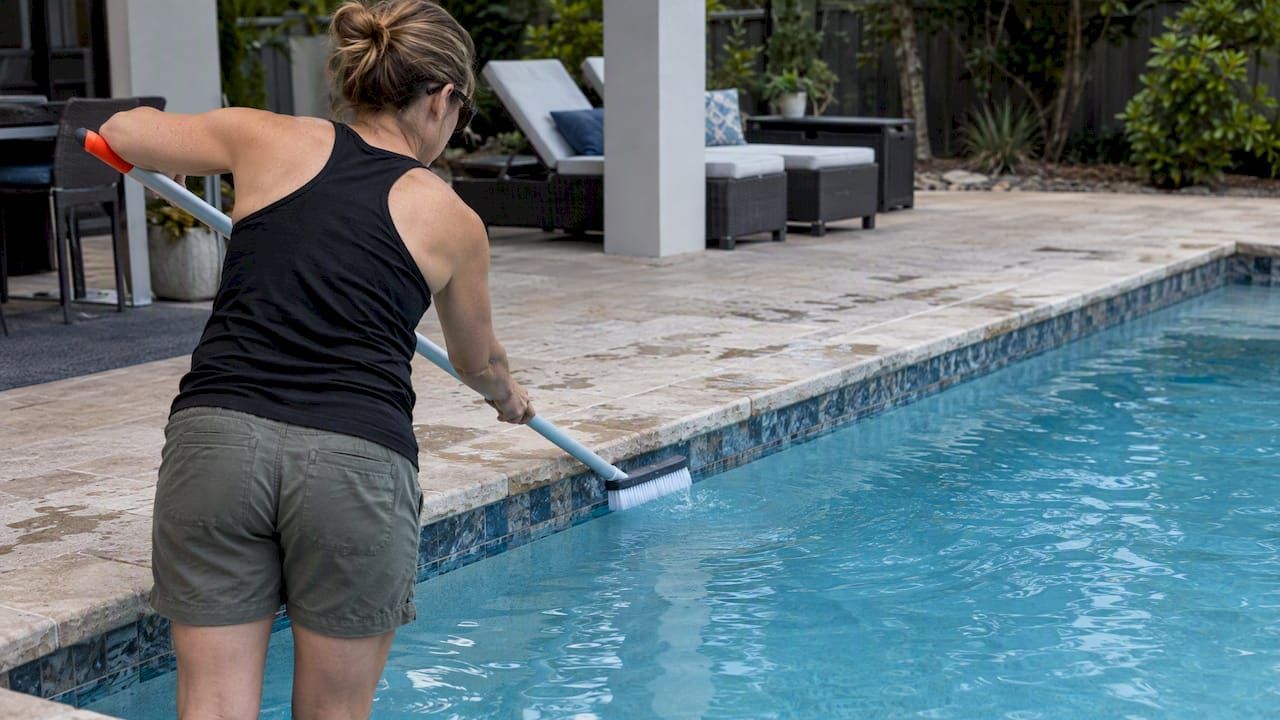
Table of Contents
- What's actually on your tile: scale, stains, or something else
- Step-by-step cleaning workflow: tools, gentle methods, then escalation
- Spot acid treatment: the professional technique and its limits
- Prevention: LSI, salt quality, and equipment care
- Oceancare's eco-friendly approach to ongoing tile care
- Removing and preventing biofilm and algae in saltwater pools
- How often should you clean saltwater pool tile?
- When DIY makes sense and when to call a pro
- Keep your tile protected after cleaning
- Sources
- FAQ
What's actually on your tile: scale, stains, or something else
Not every mark on saltwater pool tile is the same problem, and treating the wrong one wastes time or damages the surface. Calcium carbonate scale looks like a white, flaky crust that forms mostly at the waterline. Calcium silicate scale is grayish, harder, and bonds more tightly, usually building up over months of neglect. Metal staining from copper or iron shows up as blue, green, or rust-colored streaks and behaves nothing like calcium.
Salt chlorine generators change your water's chemistry over time by pushing pH upward, a shift often called the pH ceiling. That rising pH raises your Langelier Saturation Index, the calculation that predicts whether calcium carbonate will dissolve or precipitate onto surfaces like tile, heaters, and salt cells, according to Orenda's technical guide on scale prevention.
Before cleaning anything, run these checks:
- Test pH, total alkalinity, and calcium hardness with a reliable kit.
- Use a metal test strip if you suspect copper or iron staining.
- Scratch a small area gently: scale usually flakes, while metal stains smear or don't budge with light pressure.
Step-by-step cleaning workflow: tools, gentle methods, then escalation
Gather your tools before you start: a soft nylon pool brush, plastic scraper, spray bottle, rubber gloves, and eye protection. Skip metal brushes and wire pads entirely, since they scratch grout and glaze. Oceancare's guide on how to easily clean pool tiles walks through the same basic tool list for homeowners starting from scratch.
- Test and balance chemistry first. Bring pH to 7.2 to 7.6 and confirm total alkalinity and calcium hardness are in range before you clean anything. Cleaning tile in unbalanced water just invites the scale to return within days.
- Brush and rinse mechanically. Scrub the tile line with a nylon brush, vacuum loose debris, and rinse thoroughly. This step alone removes light scale and biofilm without any chemical risk.
- Move to mild acid or citric cleaners only if scale persists. Dilute citric acid per label instructions, patch test on a hidden tile first, apply with a soft cloth or brush, and rinse immediately. Effective methods for pool tile calcium removal covers dilution ratios and timing in more detail.
- Use pumice or non-scratch pads only on unglazed ceramic tile. Test compatibility on a small, inconspicuous section first, since pumice can permanently dull glazed or glass surfaces.
- Neutralize, rebalance, and inspect. Retest pH and alkalinity after any acid contact, rebalance as needed, and check the tile surface for dullness, etching, or grout damage.
Pro Tip: Keep a small notebook or phone note logging what you used, the dilution, and the result, so you're not guessing again next season.
Spot acid treatment: the professional technique and its limits
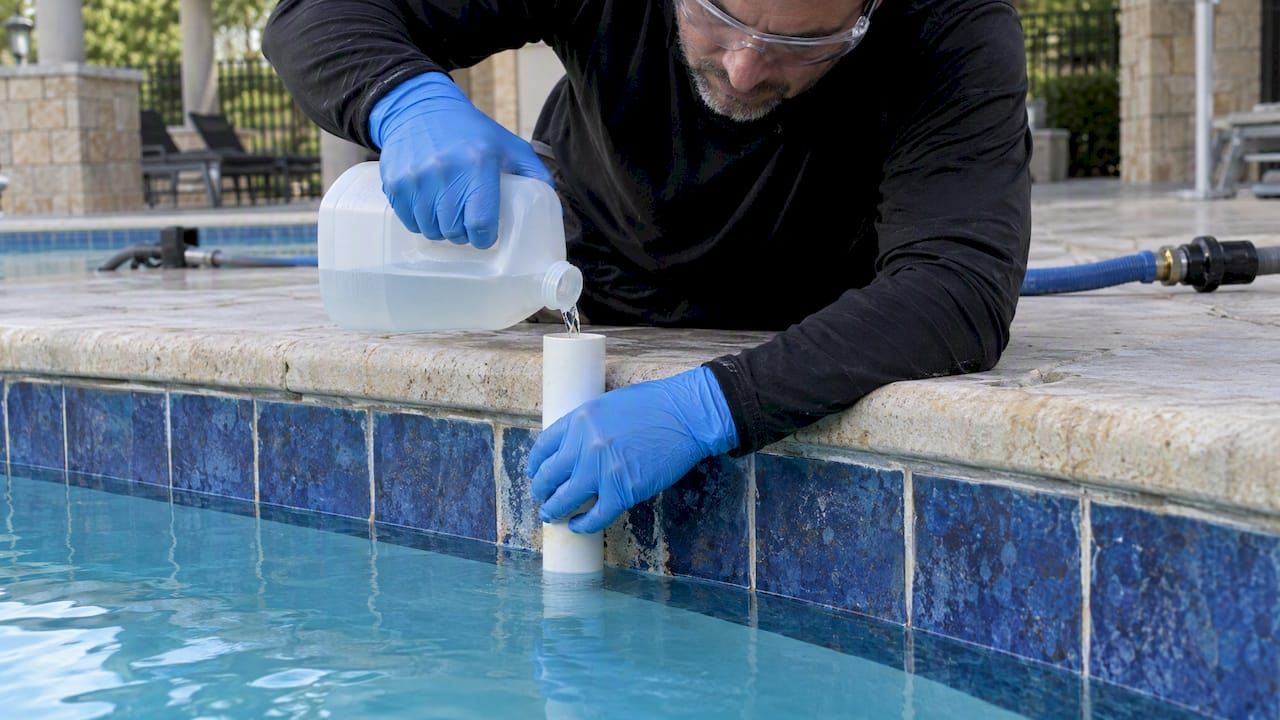
Pool technicians often use a targeted method for stubborn calcium spots: they hold a short length of PVC pipe against the stain, pour diluted acid slowly through it so the solution contacts only that area, then brush and rinse immediately, according to J Designs' guide to saltwater pool stains. This confines the acid instead of splashing it across the whole tile line.
Skilled technicians treat this as a controlled, high-risk procedure rather than a casual fix, since even a few extra seconds of contact time can etch glass or polished stone.
Before attempting it yourself:
- Wear gloves, goggles, and a respirator rated for acid fumes.
- Never mix acid products with chlorine or other pool chemicals.
- Neutralize and retest pH and alkalinity immediately after treatment.
- Avoid acid entirely on natural stone, polished finishes, or glass tile, where patch-test guidance for glass tile applies directly.
If your tile substrate is unknown or the cell and heater already show heavy scale damage, that's a strong signal to call a professional rather than improvise.
Prevention: LSI, salt quality, and equipment care
Long-term prevention beats repeated cleaning, and it starts with the Langelier Saturation Index. Salt systems tend to push pH higher over time, so managing where pH will land rather than reacting to where it sits today keeps your LSI in a safe range and protects the waterline, salt cell, and heater from scale, which forms first on warmer surfaces according to Orenda's scale prevention guide.
- Use pool-grade, high-purity salt rather than cheap rock or road salt, since impure salt introduces metals that stain tile.
- Pre-dissolve salt when practical and add it slowly with the pump running to avoid concentrated pockets.
- Add a phosphate-free sequestering agent or chelator to keep calcium and metals suspended in the water instead of settling on tile.
- Test metal levels periodically, especially if you notice blue-green staining near fittings or lights.
- Run cool-down cycles on salt cells and heaters, maintain steady circulation, and check zinc anodes for corrosion.
Pro Tip: Test pH, alkalinity, and calcium hardness weekly, and do a visual tile inspection once a month so scale never gets the chance to harden.
Oceancare's eco-friendly approach to ongoing tile care
Some pool tile product lines include calcium releasers, acid-free tile cleaners, and low-VOC sealers built for regular maintenance rather than emergency intervention. For readers dealing with glass tile specifically, the glass tile scale removal guide explains why patch testing matters before any product touches a fragile surface.
For heavier calcium buildup, the pool tile acid washing overview explains when a full acid wash makes sense and when it doesn't. Reach for an eco-friendly cleaner for routine upkeep and reserve stronger acid methods for stubborn, established scale, always following label directions and patch testing first.
Removing and preventing biofilm and algae in saltwater pools
Saltwater pools aren't immune to biofilm, the slick, slightly slimy layer that forms when organic material and bacteria colonize tile, especially in shaded corners or areas with weak circulation. Unlike hard calcium scale, biofilm often wipes away with a nylon brush and doesn't need acid at all. Ignoring it, though, gives algae spores a surface to anchor to, and salt alone doesn't sanitize water thoroughly enough to prevent that on its own.
Brush the tile line and any rough grout weekly, since biofilm hides in texture that smooth glaze doesn't offer. Keep your sanitizer levels consistent, since salt cells only work as intended when chlorine output and circulation stay steady, and dead zones behind ladders or lights are common trouble spots. Running the pump long enough each day to turn over the full pool volume matters more here than people expect, because stagnant water gives biofilm time to establish before your sanitizer reaches it.
If a greenish or brown film keeps returning to the same spot, treat that as a circulation issue first. Check for weak return jets or debris blocking flow in that area before assuming it's a chemistry problem. Combine mechanical brushing with a well-balanced sanitizer routine, and biofilm rarely gets the chance to turn into a full algae bloom on the tile itself.
How often should you clean saltwater pool tile?
Weekly brushing during swim season keeps biofilm and early scale from ever hardening, and it takes only a few minutes as part of your regular water testing routine. A monthly visual inspection catches calcium buildup or metal staining while it's still light enough for gentle cleaning to handle.
Deeper cleaning, the kind involving citric acid or spot treatments, is usually only needed once or twice a season if your prevention routine is solid. Pools with heavy bather load, high calcium hardness source water, or older salt cells may need attention more often, so let visual inspection guide the schedule rather than the calendar alone.
Off season, a single thorough cleaning and chemistry check before closing the pool prevents scale from setting over the winter months. Skipping that step is one of the most common reasons homeowners open their pool in spring to find crusted, stubborn calcium that a quick brush won't touch anymore.
When DIY makes sense and when to call a pro
I've found that most homeowners can handle testing, brushing, and mild citric treatments safely with basic precautions. Hire a professional when you see etching, widespread damage near the heater or salt cell, metal stains that won't lift, or when you're unsure what your tile is made of. Test conservatively, document what you try, and stop before you guess your way into damage.
Keep your tile protected after cleaning
Once your tile is clean, staying ahead of scale is easier than fighting it again. Oceancare Store's pool tile maintenance products are formulated eco-friendly, low-VOC, and acid-free, built for the regular upkeep that keeps saltwater deposits from hardening in the first place. Visit the product page to find the right cleaner or sealer for your tile type.
Sources
FAQ
What can ruin a saltwater pool?
Unbalanced water chemistry is the main threat: a high pH ceiling drives scale formation, while impure salt or corroded equipment introduces metals that stain tile and surfaces. Neglecting circulation and regular testing lets both problems compound over a season.
What is the best thing to clean pool tiles with?
Start with a soft nylon brush and plain water rinse, since this removes light scale and biofilm without any chemical risk. For persistent calcium deposits, a diluted citric acid cleaner applied with a patch test first is a safer choice than harsh commercial acids.
What is the best cleaner for saltwater pools?
There's no single best cleaner, since the right product depends on whether you're dealing with light biofilm, calcium scale, or metal staining. Eco-friendly, acid-free options work well for routine maintenance, while stubborn calcium may need a citric acid spot treatment with proper dilution and rinsing.
How do I get my saltwater pool crystal clear?
Balance pH, total alkalinity, and calcium hardness first, since cloudy water often traces back to one of these being off. Keep circulation running long enough to turn over the full pool volume daily and brush the tile line weekly to prevent biofilm from clouding the water further.
What causes calcium scale specifically in saltwater pools?
Salt chlorine generators tend to push pH upward over time, raising the Langelier Saturation Index and making calcium carbonate more likely to precipitate onto warm surfaces like the waterline, salt cell, and heater, according to Orenda's technical guide. Managing that pH ceiling with regular testing and sequestering agents keeps the water from reaching the point where scale forms.

