
Environmental Responsibility in Surface Care for Homeowners
TL;DR:
- Environmental responsibility in surface care involves choosing certified, properly handled products that minimize chemical release and packaging waste. Using incompatible cleaners damages surfaces, increases long-term chemical use, and creates unnecessary environmental impacts. Effective maintenance relies on proper product formulation, consistent practices, and early surface intervention to reduce total chemical and resource consumption.
Most homeowners assume that switching to a product labeled "green" or "chemical-free" is all it takes to clean responsibly. That assumption costs more than you'd think. Environmental responsibility in surface care goes well beyond what's printed on a bottle. When the wrong product meets a pool tile or a marble countertop, you're not just risking surface damage. You're triggering a chain reaction: more aggressive treatments, more waste, more chemicals in your drain. This guide cuts through the noise and gives you a practical, honest look at what sustainable surface care actually means for your home, your pool, and your property.
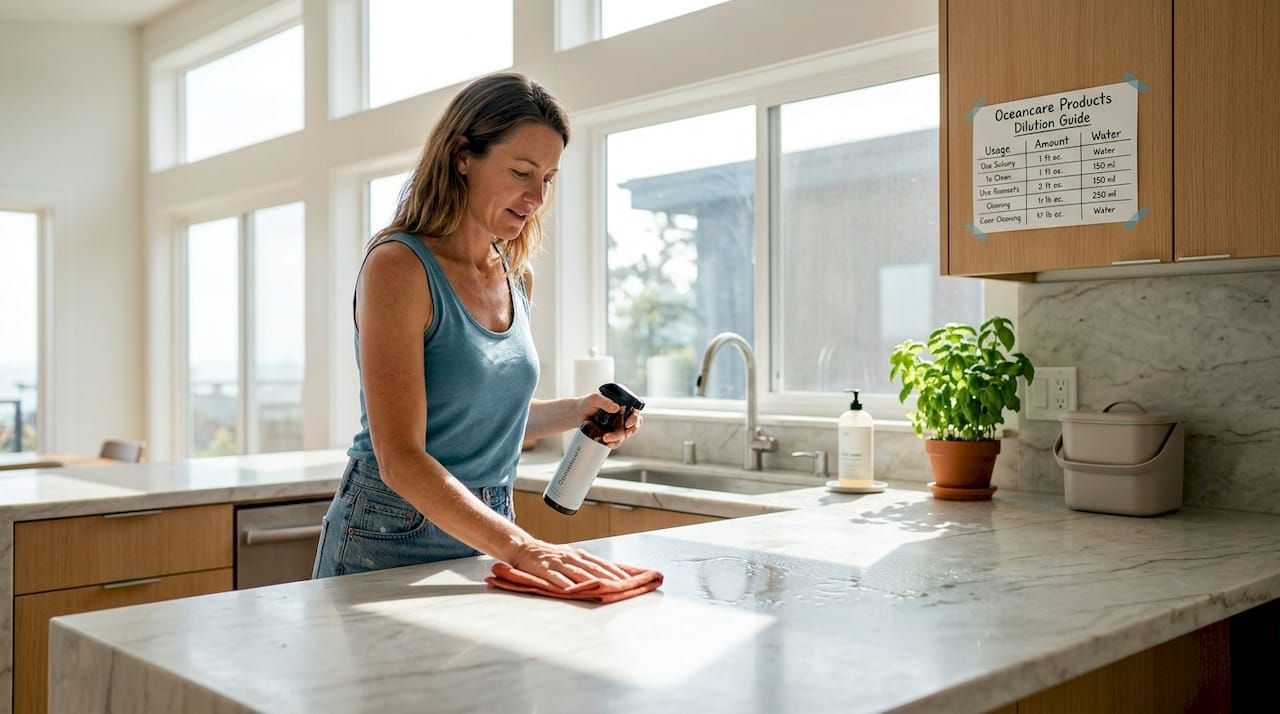
Table of Contents
- Key Takeaways
- Environmental responsibility in surface care: what you're actually releasing
- How to evaluate "sustainable" products beyond the label
- Sustainable practices for natural stone and pool surfaces
- Practical steps for eco-responsible surface maintenance
- My take on where surface care sustainability is actually heading
- Eco-friendly surface care products from Oceancarestore
- FAQ
Key Takeaways
| Point | Details |
|---|---|
| "Chemical-free" is misleading | Every cleaner uses chemistry; sustainability depends on ingredient safety, packaging, and dosing. |
| Surface damage increases footprint | Using the wrong cleaner on stone or pool tile causes damage that demands more resources to fix. |
| Labels need scrutiny | Look for EPA Safer Choice certification, not just marketing buzzwords on the front of the bottle. |
| Operations matter as much as products | Proper dilution, storage, and disposal drive more environmental gains than product choice alone. |
| Sealers and protectants reduce cleaning cycles | Long-lasting protection means fewer treatments and less chemical use over time. |
Environmental responsibility in surface care: what you're actually releasing
Most people think about cleaning products in terms of what they remove. The better question is what they release. Cleaning products release chemicals into the environment through evaporation into indoor air and drain runoff into waterways, and the concentrated forms of many products pose real exposure risks just during handling.
Here's what's actually happening when you clean:
- VOC emissions: Many conventional cleaners contain volatile organic compounds that evaporate during and after application, contributing to indoor air pollution and, in outdoor settings, ground-level ozone formation.
- Drain runoff: Surfactants, phosphates, and biocides in cleaning wastewater flow into municipal systems. Some pass through treatment plants unchanged and reach aquatic ecosystems.
- Packaging waste: Single-use plastic bottles represent a significant environmental burden, especially when products are diluted enough that refillable or concentrated formats would serve the same purpose.
- Endocrine disruptors: Certain synthetic fragrances and preservatives in conventional cleaners have documented links to hormonal disruption in aquatic wildlife.
The EPA emphasizes that proper training and chemical management systems are the most direct way to reduce both personal exposure and environmental harm. This is not a small detail. It means that how you handle a product matters just as much as which product you buy.
Pro Tip: Store concentrated cleaning products in a cool, dry, well-ventilated area away from drains. Always dilute in the sink, not outdoors where runoff is uncontrolled.
Nutrient loading from phosphate-heavy cleaners is a specific risk for pool owners and anyone with outdoor stone near planted areas. Excess phosphates fuel algae growth in nearby water features and natural waterways. For pool surfaces, this means that what drains from your deck or overflow matters, not just what goes directly into the pool water.
How to evaluate "sustainable" products beyond the label
Walk down any cleaning aisle and you'll see "natural," "non-toxic," "plant-based," and "chemical-free" on nearly every product. The problem is that none of these terms have standardized legal definitions in the United States. A product can call itself chemical-free while containing dozens of bioactive compounds.
As experts note , "chemical-free" often just means nature-based chemistry is at work. The real sustainability benefit comes from avoiding harmful substances, using responsible packaging, and controlling dosing. That reframe matters because it shifts your focus from a single buzzword to a broader set of criteria.
| Evaluation Factor | What to Look For | Red Flags |
|---|---|---|
| Ingredient transparency | Full ingredient disclosure, CAS numbers | Vague terms like "proprietary blend" |
| Certifications | EPA Safer Choice, Design for Environment | Unverifiable eco-claims, no third-party audit |
| Packaging | Recyclable, refillable, or bulk options | Single-use aerosol, excess packaging |
| Concentration | Dilutable concentrate format | Pre-diluted disposable bottles |
| VOC content | Low or zero VOC formulation | No VOC disclosure |
The EPA Safer Choice label is the most credible certification available to U.S. consumers. It requires that every ingredient in a product be evaluated for human and environmental safety, not just the active ones. The Design for Environment (DfE) program applies to products used in institutional and industrial settings and follows a similar standard.
Life-cycle assessment research shows that both product formulation and the energy consumed during use are major contributors to a product's environmental footprint. Packaging is consistently identified as a hotspot. This is why EPA packaging standards specifically favor pump sprays over aerosols, bulk shipping, and lightweight materials.
Pro Tip: Concentrates that you dilute yourself almost always produce less packaging waste per square foot cleaned than pre-mixed sprays. If a product offers a concentrate version, default to that.
One practical rule: if a brand cannot tell you where its surfactants come from, how its packaging is disposed of, or what third-party body certified its claims, treat it as conventional regardless of what the label says.
Sustainable practices for natural stone and pool surfaces
Sensitive surfaces like natural stone and pool tile require a level of care that generic green maintenance practices don't always address. Getting this wrong doesn't just damage your surfaces. It dramatically increases your long-term environmental footprint by triggering restoration work.
Caring for natural stone the right way
For marble, travertine, limestone, and similar materials, chemistry compatibility is non-negotiable. Only pH-neutral cleaners with a pH between 6.5 and 7.5 are safe for these surfaces. Acids etch calcite-based stones within seconds of contact. This rules out many popular "natural" home remedies:
- Vinegar: Highly acidic, will etch marble and limestone on first use.
- Lemon juice: Same problem, with the added issue of citrate residue attracting bacteria.
- Baking soda: Too abrasive for polished surfaces and alkaline enough to disrupt sealants.
- Hydrogen peroxide: Safe in very low concentrations but damaging to tinted grout and some sealers.
A pH-neutral stone cleaner formulated for daily use protects the surface and avoids the cycle of damage and restoration that drives up total chemical use. Oceancarestore's stone cleaners are built around this principle, offering effective daily care without compromising surface integrity or the surrounding environment.
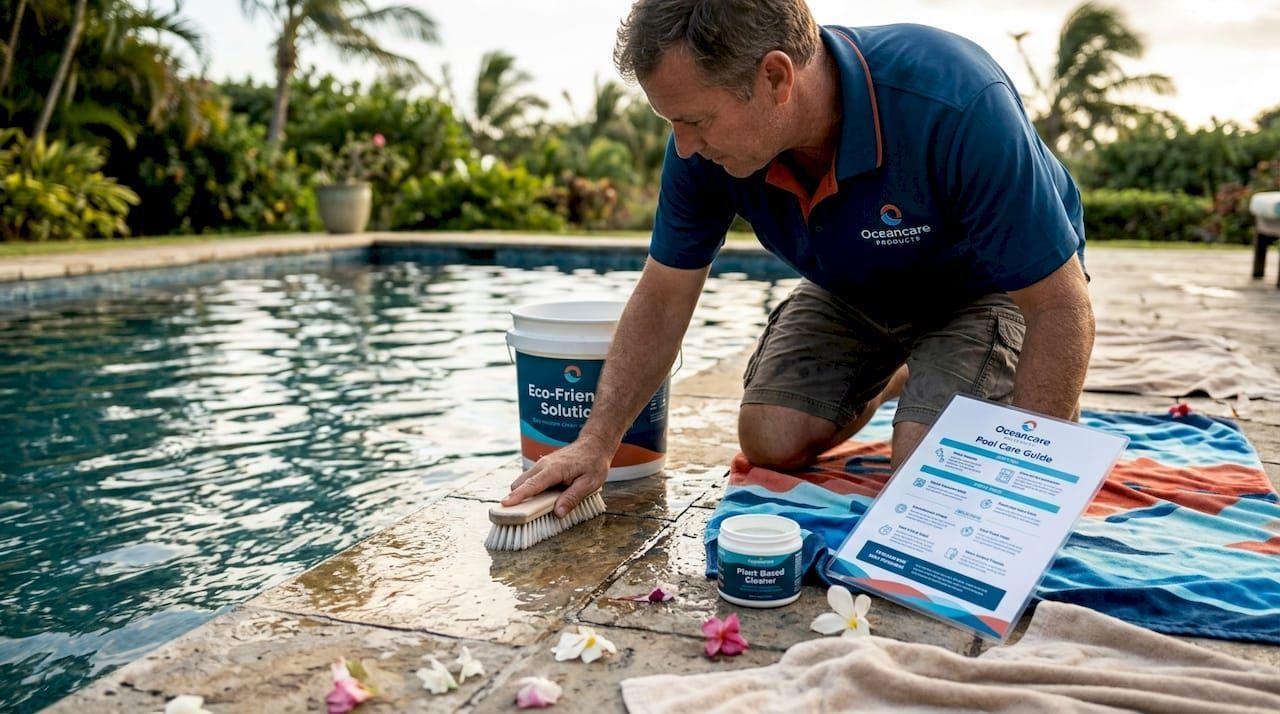
For pool tile care, calcium deposits and biofilm are the main targets. Using overly aggressive descalers on pool tile can strip protective coatings and leave surfaces porous, which means they stain faster and need more frequent treatment. Controlled, selective cleaning with properly matched chemistry reduces the volume of product needed and limits repeat treatments.
| Surface Type | Recommended pH Range | Key Avoid List | Eco Priority |
|---|---|---|---|
| Marble/Limestone | 6.5 to 7.5 | Vinegar, citric acid, bleach | Biodegradable, non-acidic |
| Pool tile | 6.0 to 8.0 | Muriatic acid in excess | Low VOC, phosphate-free |
| Grout | 6.5 to 8.5 | Bleach-based grout cleaners | Plant-based surfactants |
| Travertine | 6.5 to 7.5 | Abrasive scrubs, acids | pH-neutral, sealed regularly |
Pro Tip: After cleaning any stone surface, rinse thoroughly and allow adequate dwell time for your product before rinsing. This reduces the need for repeat applications and cuts total product use per session.
You can read more about responsible approaches to natural stone in this eco-friendly bathroom guide from Oceancarestore, which covers compatibility, sealers, and surface-specific techniques.
Practical steps for eco-responsible surface maintenance
Knowing which products to buy is a start. What separates genuinely responsible surface management from good intentions is consistent practice. Here are the steps that make the biggest difference:
- Dilute accurately. Overdosing a cleaning product doesn't clean better. It wastes product, increases runoff concentration, and costs more per use. Follow the manufacturer's dilution ratio precisely and measure rather than estimate.
- Centralize storage. Keep all cleaning products in one designated, ventilated space away from drains and water sources. Centralized storage and documented disposal are among the highest-impact operational changes any homeowner or property manager can make.
- Monitor surfaces regularly. Early intervention beats corrective cleaning every time. Catching calcium buildup on pool tile before it mineralizes, or sealing a stone surface before staining occurs, dramatically reduces the chemical intensity of each cleaning cycle.
- Apply sealers proactively. Penetrating sealers for stone and grout create a barrier that repels oils, water, and biological matter. This extends the interval between deep cleanings and reduces the total volume of cleaner used across a year. Stone and grout sealers with low VOC formulations deliver this protection without off-gassing concerns.
- Reduce plastic through bulk and refill. If your regular cleaner is available in a bulk format or a concentrate for refilling, make that switch. The packaging and delivery system you choose has measurable lifecycle implications beyond the product itself.
- Train anyone else who handles chemicals. If you manage a property with staff, documented handling procedures reduce both accidental overuse and improper disposal. Reducing chemical exposure requires training and dilution discipline, not just safer product labels.
Pro Tip: Keep a simple cleaning log for each surface type. Tracking how often you need to deep clean reveals whether your maintenance routine is actually working or whether you need to adjust your sealer, product, or frequency.
My take on where surface care sustainability is actually heading
I've watched the conversation around surface care sustainability shift a lot over the past several years, and the most consistent mistake I see is the belief that more aggressive cleaning is more thorough. It isn't. It's more expensive, more wasteful, and almost always harder on the surfaces being cleaned.
The hidden cost of repeated restoration cycles is the part most homeowners never calculate. When you use the wrong product on marble or an incompatible descaler on pool tile, you don't just damage the surface once. You set up a pattern. Etched stone needs polishing. Polished stone needs resealing. That sealer eventually needs stripping and reapplication. Every step in that chain adds chemicals, labor, and environmental burden. Stronger cleaning chemistry does not equal more sustainable. Precise, minimal interventions are what actually reduce long-term impact.
What gives me genuine optimism is the direction of product science. More brands are now building surface care products around controlled chemistry, meaning formulas that target specific contaminants without broad-spectrum aggression. The EPA Safer Choice program has created real accountability where there was almost none before. And life-cycle thinking is finally entering mainstream product development conversations.
My honest advice: think about your surfaces, your products, and your practices as one system. A great product used carelessly is no better than a mediocre one. A mediocre product used with real discipline might outperform the alternative. But when you combine a well-formulated, certified product with proper dilution, regular sealing, and early intervention, that is where surface care sustainability becomes something real rather than a marketing angle.
Eco-friendly surface care products from Oceancarestore
If this guide clarified what sustainable surface care actually demands, Oceancarestore offers a product range built around exactly these principles. Every formula in the lineup is developed for compatibility with sensitive surfaces like natural stone, pool tile, and grout, and each product prioritizes biodegradable, low VOC, and plant-based ingredients. The pool tile restorer targets calcium and biofilm without stripping surface coatings, while the stone and grout sealers extend protection intervals so you clean less frequently and use fewer products overall. For a full overview of what responsible home cleaning looks like in practice, the eco-friendly cleaning essentials guide is the best place to start.
FAQ
What does environmental responsibility in surface care actually mean?
It means selecting products with verified safety credentials, using proper dilution and handling, minimizing packaging waste, and protecting surfaces to avoid restoration cycles that consume more resources over time.
Are "natural" or "plant-based" cleaners always safer for surfaces and the environment?
Not automatically. Plant-based ingredients can still be too acidic or abrasive for stone and pool surfaces, and sustainability also depends on packaging, dosing, and proper use.
How do I know if a cleaning product is genuinely eco-friendly?
Look for third-party certifications like the EPA Safer Choice label, which evaluates every ingredient for human and environmental safety, rather than relying on front-label marketing terms.
Why is sealing natural stone considered part of sustainable surface care?
Sealers reduce how often deep cleaning is needed, which cuts total chemical use over time. Fewer cleaning cycles mean less product, less water, and less packaging waste per year.
What's the biggest mistake homeowners make with pool tile care?
Using overly aggressive descalers that strip surface coatings, which makes tiles more porous, accelerates future staining, and requires more frequent and intensive treatment to correct.

