
Definition of Residue-Free Cleaning for Homeowners
TL;DR:
- Most household surfaces quickly re-soil due to leftover cleaning agents that attract dirt and cause dullness. Residue-free cleaning involves fully removing both dirt and chemical traces, emphasizing rinsing techniques over product choice. Proper dilution, rinsing with distilled water, and thorough buffing significantly improve surface longevity and indoor air quality.
Most homeowners assume that if a cleaner smells fresh and surfaces look shiny, the job is done. But the definition of residue-free cleaning goes much deeper than that. It means removing not just the dirt you can see, but also the cleaning agents you applied to remove it. When those agents stay behind, they create invisible films that attract new dirt faster, dull surfaces over time, and can even affect the air you breathe indoors. Understanding what residue-free cleaning actually means, and how to practice it, changes the quality of every cleaning session you do.
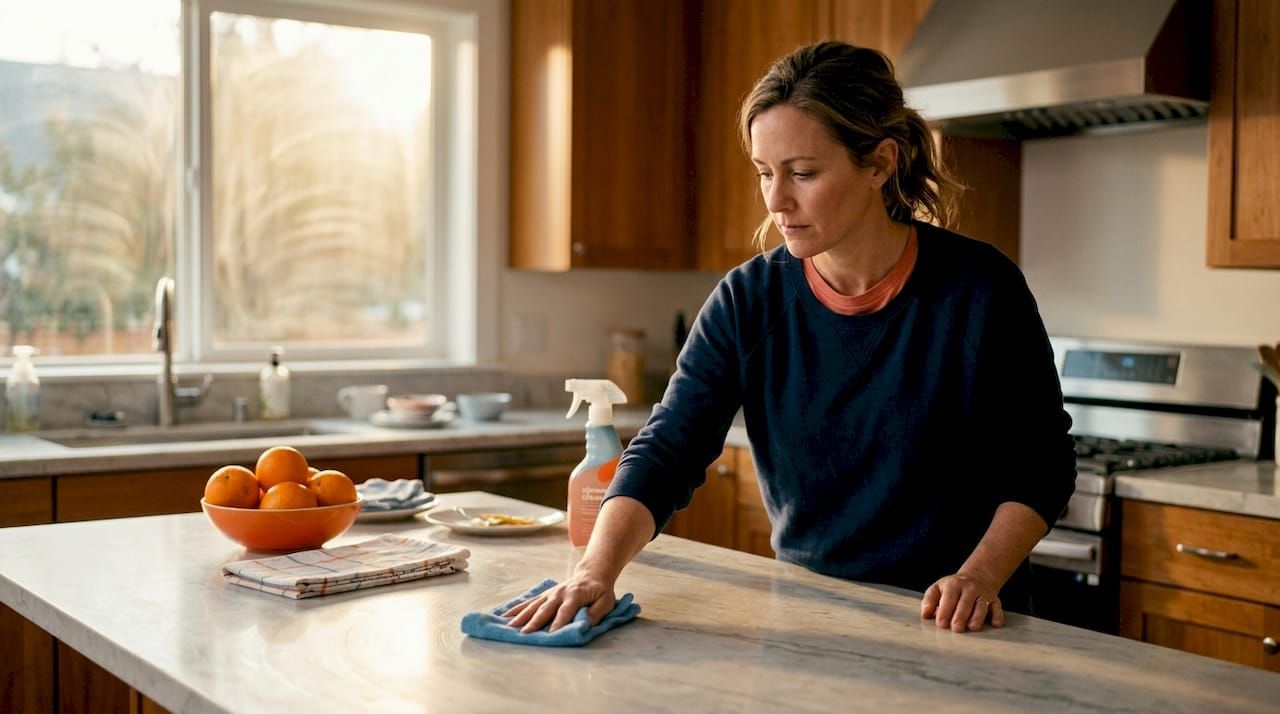
Table of Contents
- Key takeaways
- What is residue-free cleaning and why does it matter?
- Practical residue-free cleaning methods for your home
- How to identify and avoid residue buildup
- Benefits of residue-free cleaning for surfaces and your home
- My take on why technique is the real game
- How Oceancarestore supports residue-free home cleaning
- FAQ
Key takeaways
| Point | Details |
|---|---|
| Residue-free means more than clean | Both soil and cleaning agents must be fully removed, leaving no films or chemical traces behind. |
| Technique beats product choice | Proper dilution, rinsing, and mechanical action matter more than which product brand you use. |
| Residue attracts new dirt fast | Sticky detergent films left on surfaces cause rapid resoiling, sometimes within just a few weeks. |
| Not chemical-free, but controlled | Residue-free cleaning still uses chemicals; it simply means no harmful substances remain after the process. |
| Right products make a real difference | Low-residue, polymer-based cleaners and distilled water rinses help homeowners achieve lasting, film-free results. |
What is residue-free cleaning and why does it matter?
The simplest way to put it: residue-free cleaning removes both the target soil and the cleaning agents used to lift it, leaving no visible films or chemical traces on the surface. That second part is where most household cleaning falls short. You scrub away grease or grime, but a thin layer of surfactant or mineral deposit stays behind. You can't always see it, but you'll feel it as a slight stickiness or notice it when that same surface looks dull again within a week.
A critical misconception worth clearing up right now: residue-free does not mean chemical-free. All substances are chemicals, including water. Residue-free means that no harmful or problematic substances remain on the surface after cleaning. The cleaning agents do their job and are fully rinsed or neutralized before the process ends. This is an important distinction because it helps you evaluate products and techniques honestly rather than chasing misleading "chemical-free" marketing language.
Why does this matter for your home specifically? Think about your kitchen counters, bathroom tiles, or stone flooring. Every time you clean with a product that leaves even a small film, that film acts like a magnet for dust, grease, and grime. The result is a cycle where surfaces get dirty faster after each cleaning, and you end up cleaning more often and more aggressively to get the same result. Sticky detergent residue attracts dirt rapidly, causing surfaces to appear dirty again within weeks of cleaning.
Here are the key consequences of residue left on home surfaces:
- Rapid resoiling: Leftover surfactants stay tacky, pulling in new particles from foot traffic, cooking, and general household use.
- Surface dulling: Mineral deposits and soap films scatter light instead of reflecting it, making natural stone, tile, and glass look cloudy.
- Material degradation: Over time, alkaline or acidic residues that were never neutralized can slowly etch or stain sensitive surfaces like marble or grout.
- Air quality impact: Chemical film buildup on indoor surfaces contributes to off-gassing and reduces the overall freshness of your indoor environment.
Practical residue-free cleaning methods for your home
Achieving cleaning without residue is less about finding the perfect product and more about how you use what you have. Residue-free cleaning depends more on rinsing technique than product brand. That means mechanical action, the actual wiping, buffing, and rinsing steps you take, carries more weight than the cleaner's label.
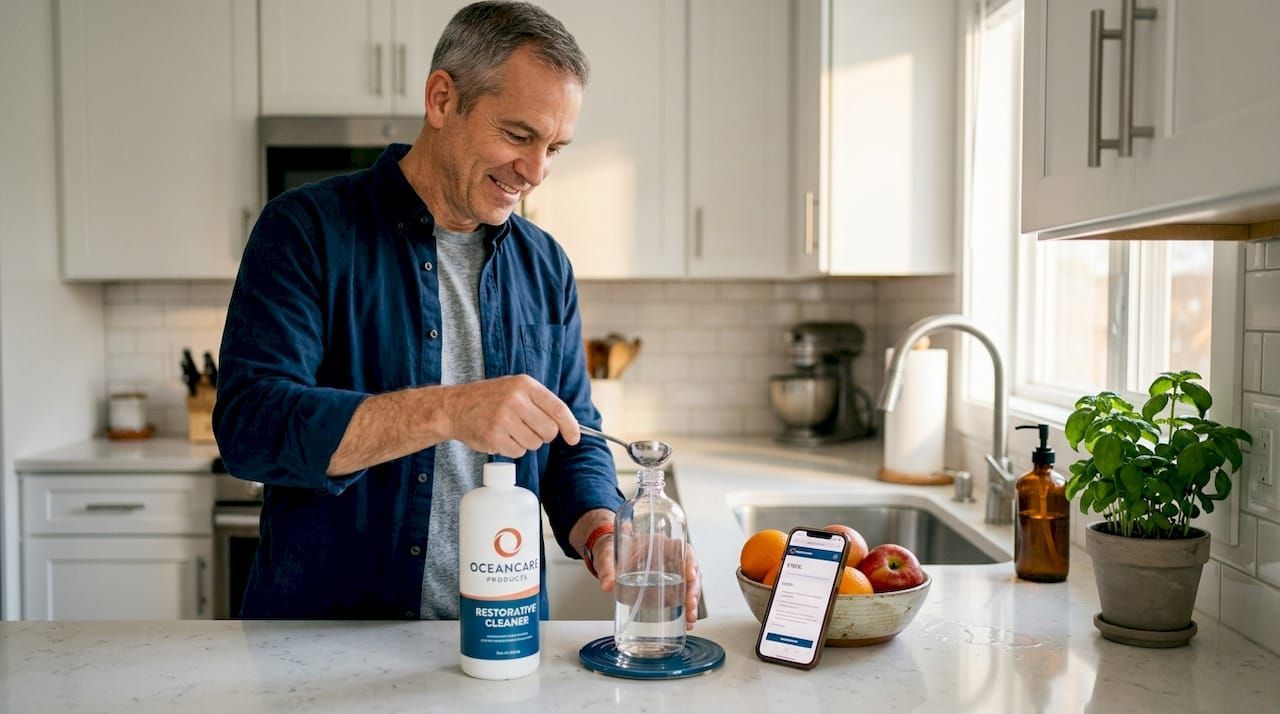
Start with dilution. Most homeowners overdose their cleaning products by a wide margin, applying twice or three times the recommended amount thinking it will clean better. It doesn't. It just leaves more residue to rinse off. Follow the manufacturer's dilution ratio precisely, and if anything, err slightly lower for routine maintenance cleaning.
Pro Tip: Mix your cleaner in a separate spray bottle with measured water rather than applying it directly from the bottle. This gives you consistent dilution every time and prevents oversaturation on the surface.
For rinsing, the quality of your rinse water matters more than most people realize. Distilled water rinses help avoid mineral residue when rinsing hard surfaces at home. Tap water in many areas carries calcium and magnesium minerals that leave white deposits as water evaporates. Using distilled or filtered water for a final rinse, especially on glass, stone, and tile, eliminates that source of residue entirely.
Key residue-free cleaning techniques worth building into your regular routine:
- Two-bucket method: One bucket holds your cleaning solution, the other holds clean rinse water. This prevents cross-contamination and keeps your rinse water genuinely clean.
- Rinseless wash products: These are formulated at high dilution ratios to clean without leaving protective layers or sticky residues behind. They are excellent for sealed stone and tile.
- Buffing after application: On smooth surfaces, buffing the cleaning solution off with a dry microfiber cloth picks up both dissolved soil and the cleaner itself, rather than leaving it to air-dry into a film.
- Diluted white vinegar rinse: A solution of one part white vinegar to ten parts water makes an effective final rinse for neutralizing alkaline detergents on non-stone surfaces. Skip this on natural stone since even mild acid can etch marble or travertine.
For pool tiles, stone, and grout, these same principles apply. The Oceancarestore guide on hard surface cleaning practices walks through eco-friendly approaches that naturally align with residue-free results.
How to identify and avoid residue buildup
Knowing what residue-free cleaning means is one thing. Recognizing when you have a residue problem in your own home is another skill entirely. The signs are fairly consistent across surfaces.
| Residue sign | What it indicates | Fix |
|---|---|---|
| Sticky feel after cleaning | Surfactant film not fully rinsed | Re-rinse with clean water or diluted vinegar |
| Streaks on glass or tile | Mineral deposits or soap film | Use distilled water for the final wipe |
| Surfaces re-soiling within days | Tacky detergent residue attracting particles | Reduce product dosage and improve rinse step |
| White chalky haze on stone | Hard water mineral deposits | Final rinse with filtered water, use a rinse aid |
Two of the most common culprits in a typical home are improperly diluted all-purpose cleaners and hard water. Water hardness and surface tension are major factors in residue formation, not just detergent formulation. Hard water leaves calcium and magnesium deposits as it evaporates, which combine with soap to create that stubborn white film you see on shower tiles and glass door panels.
Rinse aids work by lowering the surface tension of water so it sheets off surfaces rather than beading into droplets that dry into spots. This same principle applies beyond dishwashers. Adding a small amount of rinse aid to your final mopping solution for tile floors dramatically reduces water spotting.
Pro Tip: After cleaning any hard surface, run your clean fingertip across it once it dries. If it feels even slightly tacky, you have residue. A truly residue-free surface feels smooth and dry with zero drag.
If you notice your cleaners consistently leaving streaks, the resource on why home cleaners streak provides targeted solutions for the most common causes.
Benefits of residue-free cleaning for surfaces and your home
Understanding residue-free cleaning techniques pays off in ways that go well beyond aesthetics. The benefits are practical, measurable, and they compound over time.
The most immediate benefit is longer-lasting cleanliness. When no sticky film remains on a surface, there is nothing to attract airborne particles and skin cells. You clean less often because the surface simply stays cleaner. For busy homeowners, this is one of the most underrated gains in a smarter cleaning routine.
Surface lifespan improves significantly with residue-free practices. Alkaline or acidic chemical films that sit on natural stone, grout, or sealed tile do not just look bad. They actively work against the surface. Low-residue formulations reduce streaking, film buildup, and intensive rinsing needs, which directly benefits surface longevity. That means your tile grout, stone countertops, and pool surrounds hold up better and look better for years longer.
Here is a breakdown of the core benefits:
- Reduced cleaning frequency: No residue means no sticky magnet for new dirt. Surfaces stay presentable longer between cleaning sessions.
- Healthier indoor air: Less chemical film on walls, floors, and counters means fewer compounds releasing into your home's air over time.
- Lower product consumption: When you dilute correctly and rinse thoroughly, you use less product per session, cutting both cost and environmental impact.
- Better surface protection: Sealers and protective coatings bond more effectively to residue-free surfaces, extending the life of those treatments considerably.
The connection between residue and frequent deep cleaning is real. When surfaces re-soil quickly because of leftover films, homeowners compensate with more aggressive scrubbing or stronger products, which creates more residue and accelerates surface wear. Breaking that cycle starts with understanding and applying residue-free principles from the start.
My take on why technique is the real game
I've watched homeowners spend serious money on premium cleaning products and still end up with streaky tile and floors that look dirty again within three days. Every single time, the problem wasn't the product. It was the process.
What I've learned, both from working with specialized stone and tile surfaces and from the research that keeps surfacing in this space, is that most people skip the rinse step entirely or treat it as optional. They spray, wipe, and move on. But that "clean" surface is coated in a thin layer of surfactant that will start collecting dust by tomorrow morning.
The frustrating part is that the cleaning industry doesn't make this easy to see. Marketing language about "powerful clean" and "deep action" pushes people toward using more product, not less. In my experience, using half the recommended amount and doubling the rinsing time produces better results on almost every surface I've tested.
There's also something worth saying about matching your product to your water supply. I've seen homeowners in hard water areas use all the right techniques and still get white haze because nobody told them that their tap water is essentially a mineral delivery system. Switching the final rinse to filtered or distilled water on stone surfaces solved what months of product-switching couldn't.
Residue-free cleaning is a discipline. It rewards attention to detail and punishes shortcuts. Once you build the rinse step and proper dilution into your routine, you'll never go back.
How Oceancarestore supports residue-free home cleaning
Getting to a genuinely residue-free result at home is much easier when your products are formulated with that goal in mind. Oceancarestore's home essential cleaners are built around exactly this principle. They use plant-based, low-VOC formulations designed for kitchen and bath surfaces that clean thoroughly without leaving sticky films or chemical traces behind. Every product in the line is developed for easy rinsing, which means your rinse step actually works the way it should.
For homeowners who want to go deeper, the Oceancarestore eco-friendly cleaning essentials guide pairs product recommendations with the kind of technique guidance that makes residue-free results repeatable. If you've been stuck in the cycle of cleaning surfaces that get dirty again too fast, this is where to start.
FAQ
What is the definition of residue-free cleaning?
Residue-free cleaning means removing both the soil and the cleaning agents used to lift it, leaving no films, sticky layers, or chemical traces on the surface. It does not mean using chemical-free products.
Does residue-free cleaning mean I shouldn't use any chemicals?
No. All cleaning agents are chemicals. Residue-free means the chemicals used during cleaning are fully rinsed or neutralized afterward, leaving nothing harmful behind on the surface.
How do I know if my surfaces have residue buildup?
Run a clean dry finger across the surface after it dries. A sticky feel, visible streaks, or surfaces that re-soil within a few days are reliable signs of residue from leftover detergent or mineral deposits.
What is the best way to achieve residue-free results at home?
Use cleaning products at the correct dilution, apply mechanical action during wiping, and follow with a thorough rinse using filtered or distilled water. Buffing with a dry microfiber cloth after the rinse removes the last traces of both cleaner and water.
Why do surfaces get dirty again so quickly after cleaning?
Surfactant residue left on surfaces creates a tacky film that attracts dust and particles, causing rapid resoiling within days or weeks. Proper rinsing eliminates this film and extends how long surfaces stay clean.

