
5 Eco Steps to Remove Cement Haze Before 72 Hours for Homeowners
Test a small area first, then treat the haze with an acid-free, biodegradable grout-haze cleaner for most tile and stone jobs, saving a diluted professional-strength haze remover for cured, stubborn residue on tough surfaces like glazed porcelain. Wear gloves and eye protection, work in a ventilated space, and never mix cleaning chemicals. The full procedure below walks through dilution, contact time, and surface-by-surface precautions.
TL;DR:
- Use a biodegradable, acid-free cleaner first on natural stone, pool tiles, and sealed surfaces to prevent etching and avoid damage from stronger chemicals.
- For heavily cured haze on porcelain or glazed tile, acid-based cleaners can be effective but must be applied with caution to prevent surface damage.
- Always test cleaning products on a small, inconspicuous area before full application to prevent etching or discoloration, especially on delicate surfaces.
- Mechanical agitation with nylon scrub pads, grout sponges, or soft brushes can effectively remove light haze without chemicals, reducing the need for stronger cleaners.
- Rinsing thoroughly and adhering to recommended contact times are crucial to prevent surface damage and ensure complete haze removal.
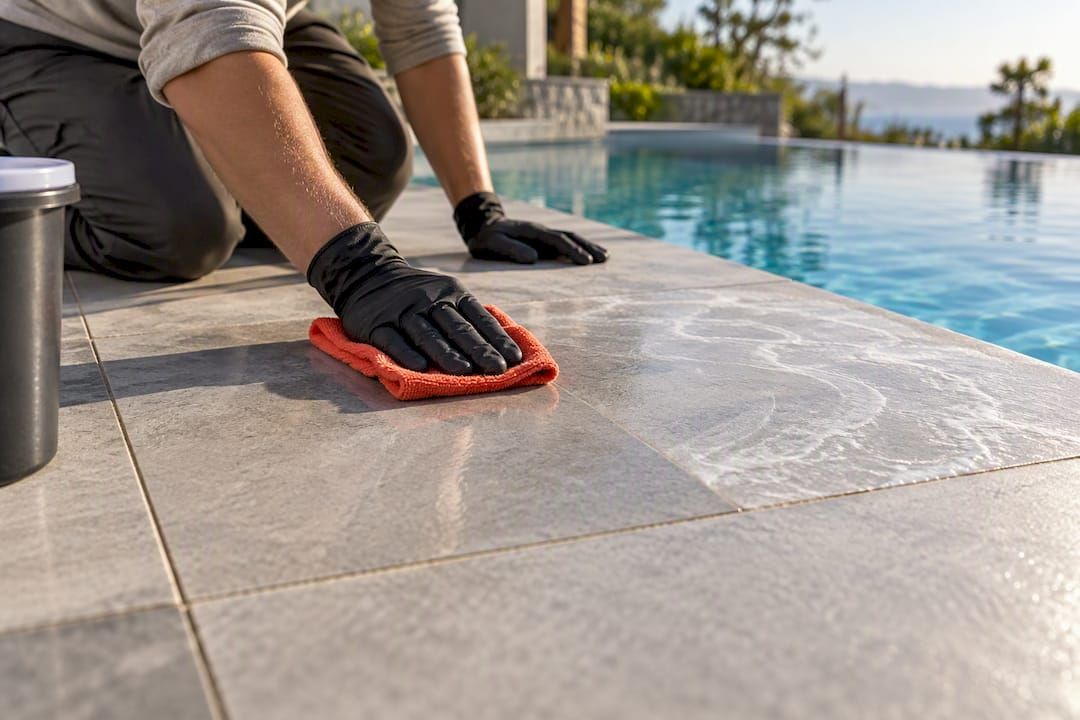
Table of Contents
- What Causes Cement Haze on Tile and Stone?
- Which DIY Removal Method Should You Try First?
- How Do You Remove Cement Haze Step by Step?
- Does Cleaning Method Change by Surface Type?
- Acid or Acid-Free: Which One Actually Removes Haze Better?
- How Can You Prevent Cement Haze Before It Sets?
- What Do Oceancare Store's Guides Recommend?
- What Dilution Ratios and Safety Gear Do You Actually Need?
- What Tools Make Cement Haze Removal Easier?
- What Mistakes Make Cement Haze Worse Instead of Better?
- How Should You Dispose of Haze Cleaning Residue?
- When Should You Call a Cement Haze Removal Professional?
- Try Oceancare Store's Biodegradable Haze Remover First
- Where to Find More Technical Guidance
- Sources
- FAQ
What Causes Cement Haze on Tile and Stone?
Cement haze is the thin, chalky film of cement particles left behind after grouting, sanding, or pouring concrete. It's different from efflorescence, which is a salt deposit that migrates up through masonry as moisture evaporates, and from lime bloom, which comes from unhydrated lime reacting with air. Haze forms because excess cement fines cling to the surface during grouting and then bond as the grout cures, usually over 48 to 72 hours.
The longer haze cures, the harder it grips the surface, which is why jobs tackled a week or more after tiling often need stronger chemistry than a same-day cleanup. Porosity matters just as much as timing:
- Dense, glazed porcelain sheds haze more easily than textured or matte tile.
- Natural stone like travertine and limestone absorbs residue into its pores, making mechanical agitation and gentler cleaners the safer bet.
- Polished concrete can trap haze in micro-pores opened during grinding, so it often needs a different removal approach entirely from ceramic tile.
Which DIY Removal Method Should You Try First?
Not every haze problem calls for the same bottle. Matching the chemistry to the surface and the age of the residue prevents a lot of expensive mistakes.
- Acid-based cleaners cut through cured cement haze fast, but they can etch polished stone and some glazes. Reserve these for ceramic or glazed porcelain, and always wear gloves, goggles, and a respirator rated for acid fumes.
- Alkaline or heavy-duty haze removers work well on cured residue and on latex-modified grout, which resists straight acids. These tend to be gentler on grout lines than acid formulas.
- Acid-free, biodegradable cleaners are the safer default for natural stone, pool tiles, and any surface with a sealer or delicate finish. They loosen haze through chelation rather than dissolving it chemically, so they won't etch calcium-based stone.
- Mechanical tools like white nylon scrub pads, grout sponges, and soft-bristle brushes handle light haze without chemicals at all. Skip anything abrasive, like steel wool or colored scouring pads, on polished or honed surfaces.
Pro Tip: If you're not sure how old the haze is or what grout was used, start with the mildest acid-free cleaner and mechanical agitation. You can always step up to stronger chemistry, but you can't undo an etched countertop.
How Do You Remove Cement Haze Step by Step?
Following a set order keeps you from over-applying chemicals or missing a step that causes callbacks. This sequence works for tile, stone, and most polished concrete jobs.
- Clear and protect the area. Remove furniture, mask baseboards or adjacent surfaces with painter's tape, and open windows or run a fan for ventilation. Put on gloves and eye protection before opening any cleaner.
- Test an inconspicuous spot. Apply your chosen product to a hidden corner or leftover tile and watch for discoloration, dulling, or etching over the manufacturer's stated contact time.
- Dilute per the label, starting weak. Manufacturer data sheets for heavy-duty haze removers specify exact dilution ratios and maximum contact times to prevent surface damage, and starting at the low end of that range costs you a few extra minutes, not a ruined floor.
- Apply, wait, and agitate. Let the cleaner sit for the recommended dwell time, then work it with a white nylon pad or soft brush in small sections rather than flooding the whole room at once.
- Rinse thoroughly, dry, and inspect. Clean water removes residual chemical and loosened haze; a dry surface shows you exactly what's left. Repeat on stubborn spots rather than reaching for a stronger product on the first pass.
Industry test-spot guidance backs this order for a reason: starting with the weakest effective concentration avoids the etching and discoloration that come from skipping straight to full strength. If two rinse-and-repeat cycles don't clear the haze, that's your signal to escalate chemistry or call a professional rather than keep scrubbing.
Does Cleaning Method Change by Surface Type?
Cement haze removal isn't one-size-fits-all. The wrong chemistry on the wrong material turns a cleaning job into a repair job.
- Porcelain and glazed ceramic generally tolerate acid-based cleaners, but test the glaze first and keep contact times short. Long dwell times can still dull some finishes even when the base tile is durable.
- Marble, travertine, and limestone react badly to acid, which etches calcium carbonate on contact. Stick to neutral or alkaline eco cleaners and gentle hand agitation, and never use a scouring pad on a honed finish.
- Polished concrete responds best to mechanical honing or a manufacturer-recommended neutral cleaner rather than acid, which can strip the polish and expose aggregate unevenly.
- Sealed surfaces need a compatibility check before anything touches them. Some cleaners break down penetrating sealers, so plan on resealing afterward if you notice the surface absorbing water differently once it dries.
If you're working on porcelain specifically, surface-specific porcelain guidance covers the finish-safe techniques in more detail.
Acid or Acid-Free: Which One Actually Removes Haze Better?
Acids dissolve cementitious salts through a direct chemical reaction, which is exactly why they work fast on cured mortar smears and exactly why they can etch calcium-sensitive stone in the same breath. Acid-free cleaners take a slower route, chelating and loosening the film rather than reacting with it, which makes them the safer choice for routine maintenance and delicate surfaces.
- Reach for acid only when haze is heavily cured and the surface is confirmed acid-tolerant, like unglazed porcelain or exterior pavers.
- Minimize etching risk with heavy dilution, short contact times, and an immediate, thorough rinse. Don't let acid sit "just a little longer" to save a second application.
- Default to acid-free, biodegradable cleaners for pool tiles, natural stone, and any surface you'll be cleaning repeatedly, since they don't accumulate the same wear over dozens of applications.
Pro Tip: If a cured haze spot needs acid to break, treat only that spot. There's no reason to acid-wash an entire floor when a diluted spot treatment plus mechanical scrubbing gets the same result with far less risk.
How Can You Prevent Cement Haze Before It Sets?
Prevention takes a fraction of the effort that removal does, and it starts before the grout even finishes curing.
- Rinse and sponge the tile immediately after grouting, working in small sections so haze doesn't get the chance to dry onto the surface.
- Run a paper-towel test and wait 48 to 72 hours before sealing. Pressing a dry paper towel on the grout and checking for moisture or color transfer confirms it's cured enough to seal.
- Match your sealer to the material. Ask about resealing after any deep clean, since aggressive cleaning cycles wear down penetrating sealers faster than daily foot traffic does.
Grout and mortar specifications vary by product, and manufacturer guidance on cure times and cleanup windows is worth checking before you assume every grout behaves the same way.
What Do Oceancare Store's Guides Recommend?
Oceancare Store's own field guides, including its step-by-step DIY removal walkthrough and its maintenance tips for tile longevity, both lead with the same rule: test first, then treat with the mildest effective product. That approach lines up with the store's broader positioning around plant-based, low-VOC formulas built to clean without the etching risk that comes with harsh acid washes. The biodegradable haze remover featured in those guides reflects that same test-first, surface-sensitive philosophy.
What Dilution Ratios and Safety Gear Do You Actually Need?
Most acid-free grout-haze cleaners come ready to use or call for a light dilution, often somewhere between a 1:4 and 1:10 ratio with water depending on how cured the haze is. Heavy-duty acid or alkaline haze removers are far more concentrated and typically start at a stronger ratio for cured residue, backing off for routine maintenance. Always read the specific product label rather than assuming one ratio fits every brand, since manufacturer data sheets set exact maximum contact times for a reason.
Contact time is where most damage happens. A cleaner rated for a five-minute dwell that sits for fifteen minutes doesn't work five times better. It just etches the surface, corrodes grout lines, or leaves a dull patch that no amount of rinsing fixes. Set a timer instead of guessing.
On safety gear, treat any acid or alkaline haze remover the way you'd treat pool chemicals:
- Chemical-resistant gloves, not disposable latex ones, especially with acid formulas.
- Splash-proof goggles rather than glasses, since haze removers can spatter during agitation.
- A respirator or at minimum an N95 when working indoors or in a poorly ventilated bathroom, since acid fumes build up fast in small spaces.
- Open windows, a running exhaust fan, or a portable fan pointed out a doorway.
Acid-free and biodegradable options still deserve gloves and eye protection, even though the fume risk is lower, because concentrated cleaning agents of any kind can irritate skin on contact.
What Tools Make Cement Haze Removal Easier?
The right chemistry only gets you halfway. Agitation does the rest of the work, and the tool you use determines whether you finish the job or start a repair.
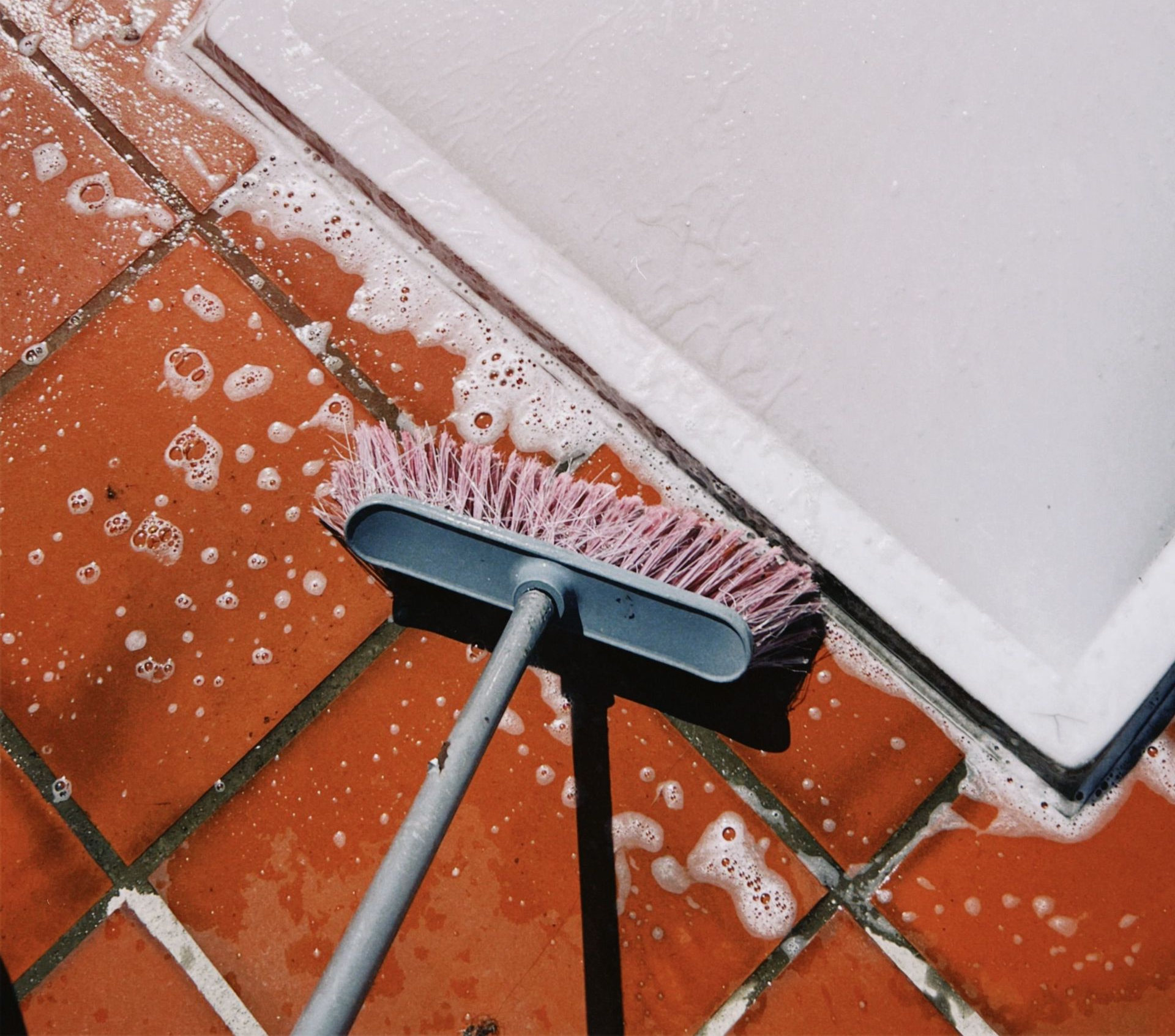
- White nylon scrub pads are the workhorse for haze removal. They're abrasive enough to break up film without scratching glazed tile or polished stone the way colored pads and steel wool do.
- Grout sponges with a beveled edge clean flat tile surfaces while pulling excess cleaner and loosened haze out of grout lines in one pass.
- Soft-bristle brushes , including old toothbrushes for grout lines, reach into corners and textured tile where a flat pad can't sit flush.
- Plastic scrapers lift dried, heavy deposits off flat surfaces before you even reach for a chemical cleaner, which cuts down on how much product you need.
- Microfiber cloths for the final dry and inspection pass show haze residue that a wet surface hides.
Skip wire brushes, steel wool, and any pad marked heavy-duty or industrial unless you're working on unglazed exterior concrete or pavers, where scratch resistance isn't a concern the way it is on a kitchen backsplash.
What Mistakes Make Cement Haze Worse Instead of Better?
A few habits turn a simple cleanup into a callback, and most of them come from rushing the process.
- Skipping the test spot. Applying a new product straight to the main surface is how etching and discoloration happen, and it's the single most avoidable mistake on this list.
- Mixing cleaning chemicals. Combining an acid cleaner with a bleach-based product can produce dangerous fumes; always rinse completely between different chemical types.
- Letting cleaner sit past the labeled contact time. Longer isn't stronger. It just increases the odds of surface damage without improving results.
- Using the wrong tool for the surface. A colored scouring pad or wire brush on polished stone leaves scratches that no cleaner can undo.
- Sealing before the grout fully cures. Sealing over uncured grout traps moisture and haze underneath, which shows up as a cloudy finish weeks later.
- Jumping straight to acid. Many light-to-moderate haze cases clear with mechanical agitation and a mild cleaner; rinsing and repeating solves more jobs than reaching for stronger chemistry on the first attempt.
How Should You Dispose of Haze Cleaning Residue?
Rinse water from acid-free and biodegradable cleaners is generally safe for standard household drains, since these formulas are designed to break down without leaving persistent residue in wastewater. Acid-based and heavy-duty alkaline cleaners are a different story. Concentrated runoff from these products can affect septic systems and local waterways if it's rinsed straight into a storm drain, so check your product label and local wastewater guidelines before disposing of larger volumes.
Leftover concentrate, empty containers, and any unused mixed solution should go through household hazardous waste collection rather than the trash or a sink, particularly for acid-based products. If you're cleaning an outdoor patio or pool deck, sweep up dried haze debris before rinsing so it doesn't wash directly into soil or nearby plant beds. Choosing a biodegradable, low-VOC cleaner from the start sidesteps most of this disposal complexity entirely, which is one more reason it's worth defaulting to the gentler option for routine jobs.
When Should You Call a Cement Haze Removal Professional?
Call a professional when haze has cured for weeks on delicate natural stone, covers a large commercial floor, or hasn't budged after two rinse-and-repeat cycles. Pros typically use controlled acid application, mechanical restoration equipment, and resealing in one visit. Cost tracks with area size, surface type, haze severity, and how much access and drying time the job needs.
Try Oceancare Store's Biodegradable Haze Remover First
If you'd rather skip mixing your own dilution ratios, Oceancare Store's biodegradable grout haze remover is formulated to lift cured cement film without the acid etching risk that comes with harsher industrial cleaners. It's plant-based and low VOC, which makes it a safer everyday option for pool tile, natural stone, and grout lines you'll be cleaning more than once.
It works best on light to moderate haze and routine maintenance cleaning, and like any product on this list, it still deserves a test spot on an inconspicuous area before you tackle the whole floor. Pair it with a white nylon pad for stubborn patches, and if your project also needs post-cleaning protection, browse the stone and grout sealers built to reseal surfaces once haze is gone. Start with the Pool Tile Maintenance Products line if your project centers on a pool deck or waterline tile, and order the haze remover directly to have it on hand before your next cleaning weekend.
Where to Find More Technical Guidance
- Ceramic Tile Foundation events and resources for installation and clean-up training
- SpecMix product and specification resources for grout and mortar cure timelines
- Quikrete technical resources for cement chemistry and material data
- ARCAT construction specification resources for application and clean-up notes
Sources
FAQ
Will Dawn dish soap remove grout haze?
Dawn can help lift light, fresh residue when paired with warm water and a scrub pad, but it won't break down cured cement haze the way a dedicated grout-haze cleaner does. For anything more than a light film, an acid-free biodegradable cleaner will get better results with less scrubbing.
Does vinegar get rid of grout haze?
Vinegar is a mild acid and can loosen light haze on unsealed ceramic tile, but it's risky on natural stone since it etches calcium-based surfaces on contact. It's also too weak for heavily cured residue, so most jobs need a purpose-built acid-free or heavy-duty haze remover instead.
What removes cement residue most effectively?
For cured, stubborn residue, a diluted acid-based or alkaline haze remover applied with mechanical agitation clears it fastest, while an acid-free biodegradable cleaner handles lighter jobs safely on sensitive surfaces. Matching the product to your surface, following the manufacturer's dilution and contact time guidance, and rinsing thoroughly makes the biggest difference in results.
Will grout haze eventually go away on its own?
No, cement haze does not wear off with normal foot traffic or routine mopping once it has cured. It needs an active cleaning step, whether that's mechanical scrubbing, an acid-free cleaner, or a stronger haze remover for older residue.

