
24 Hour Drop Test for Tile: Avoid Acid Washing Damage, Homeowners
Acid washing removes calcium scale fast, but it can also permanently etch marble, limestone, travertine, and onyx, and it weakens grout by opening up its pores. If you're facing mineral buildup, test a hidden spot first, skip acid entirely on natural stone, and reach for a pH-neutral cleaner before you reach for anything stronger. Wear proper protection and neutralize any acid you do use.
TL;DR:
- Acid washing can damage natural stone surfaces like marble, limestone, travertine, and onyx, which are highly susceptible to etching and pitting.
- Most glazed ceramic and porcelain tiles tolerate diluted acid reasonably well, but unglazed or cracked tiles are at risk of permanent damage.
- A simple fizz test with diluted acid can determine if calcium carbonate deposits are present, guiding whether acid is effective or mechanical removal is necessary.
- Proper safety precautions are essential, including ventilation, full PPE, neutralizing spills, and never combining acid with bleach or ammonia.
- Routine cleaning with pH-neutral products and sealing surfaces regularly can prevent mineral buildup more safely and effectively than frequent acid washes.
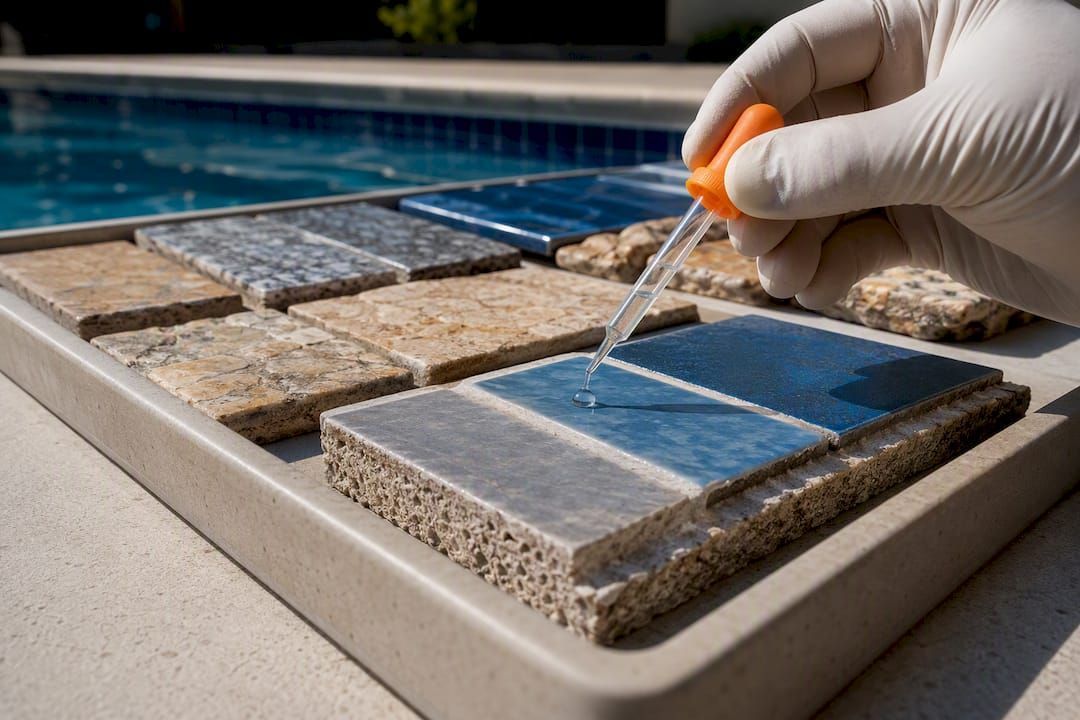
Table of Contents
- Acid Washing Risks for Tile: Which Surfaces Can Take It
- How Do You Prepare Safely Before Acid Washing Tile?
- Will Acid Actually Remove Your Stain? Try This Test First
- What Are the Best Acid-Free Alternatives for Tile?
- When Should You Call a Professional Instead?
- Why Oceancarestore Focuses on Acid-Free Formulas
- A Practical Take on Acid Washing
- Where to Find Acid-Free Cleaners and Sealers
- Sources
- FAQ
Acid Washing Risks for Tile: Which Surfaces Can Take It
Not every tile reacts to acid the same way, and the difference between "fine" and "ruined" often comes down to what the surface is actually made of.
Most glazed ceramic and porcelain hold up reasonably well against diluted acid, since the fired glaze acts as a barrier against etching. But that tolerance has limits: unglazed porcelain, hairline cracks, or a chipped edge give acid a way underneath the surface, and once it's in, the damage is done.
Natural stone is a different story entirely. Marble, limestone, travertine, and onyx are all calcium-based, and calcium is exactly what acid is built to dissolve.
- Marble and limestone : acid strips the polish almost instantly, leaving a dull, matte patch that no amount of scrubbing fixes.
- Travertine : already porous, it etches faster and can pit if acid pools in low spots.
- Onyx : thin, translucent, and one of the most acid-sensitive stones used in tile work.
- Grout : acid attacks cement chemistry directly, increasing porosity and weakening the structure, which means faster staining and crumbling down the line.
Metal fixtures, existing sealers, and adjacent finishes take a hit too. Acid fumes corrode chrome and brass, strip factory sealers off stone in seconds, and can discolor paint or vinyl nearby. One test that matters more than any product label: a 24-hour spot check in an inconspicuous area, according to guidance on safe application, tells you more about how your specific tile will react than any generic chart ever will.
How Do You Prepare Safely Before Acid Washing Tile?
Acid washing tile safety starts before you open the bottle, not after something goes wrong. Muriatic acid, the most common choice for stubborn scale, is also the most aggressive and the most likely to cause fumes or etching if you skip steps.
- Ventilate the space fully. Open windows, run fans, and never work in an enclosed bathroom or indoor pool room without airflow.
- Put on full PPE: acid-resistant gloves, splash goggles (not just glasses), and a respirator rated for acid gases. Cartridge respirators and heavy-duty gloves are standard stock at most safety-supply retailers and hardware stores.
- Always add acid to water, never water to acid, and start with a mild dilution rather than a stronger mix.
- Work in small sections so you can rinse and neutralize before the acid sits too long.
- Cover or remove nearby metal, plants, and anything acid could splash onto.
- Keep baking soda or soda ash on hand to neutralize spills immediately, and flood any skin contact with cool water for at least fifteen minutes.
Never combine acid cleaners with bleach or ammonia. Mixing acid with other chemicals can release dangerous gases, and that risk applies whether you're working on a bathroom floor or a pool deck.
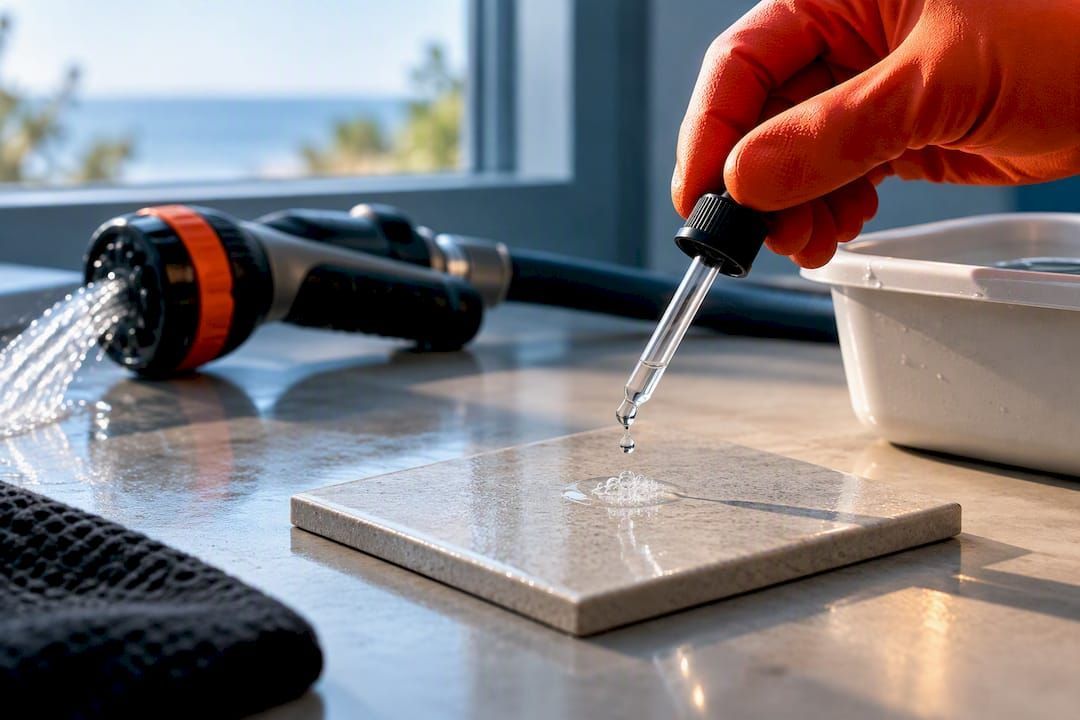
Pro Tip: Keep a garden hose running nearby the entire time you work. Fast dilution is the single best first-aid move for both skin contact and floor drains.
Once you're done, neutralize thoroughly and never pour raw acid runoff down a storm drain. Most municipalities require it to be neutralized to a safe pH first, so check your local hazardous-waste rules before disposal.
Will Acid Actually Remove Your Stain? Try This Test First
Before you touch tile with acid, run the drop test. Place a single drop of diluted muriatic acid directly on the deposit and watch closely.
- Fizzing or bubbling means you're dealing with calcium carbonate, and acid will dissolve it effectively.
- No reaction at all means the deposit is calcium silicate, a harder mineral that acid can't touch no matter how strong you make it.
That second outcome trips up a lot of homeowners. The instinct is to mix a stronger batch and try again, but the correct move when nothing fizzes is mechanical removal, like pumice stone for small ceramic or porcelain spots, or professional bead blasting for heavier calcium silicate buildup. Stronger acid on a surface that isn't reacting just adds etching risk with zero payoff.
If the test does fizz, start with the mildest dilution that works (a mild dilution for light buildup is a reasonable starting point), keep contact time short, and neutralize right away rather than letting it dwell longer for a "deeper clean."
What Are the Best Acid-Free Alternatives for Tile?
Acid-free cleaning covers more ground than most homeowners assume, and for routine maintenance it's honestly the smarter starting point. Stone industry guidance is blunt about this: acid was never meant to be a regular grout cleaner, and pH-neutral formulas handle everyday grime without touching the cement structure underneath.
- A pH-neutral tile and stone cleaner handles routine grime on marble, travertine, and grout without any etching risk.
- Pumice stone works well on small mineral spots on ceramic or porcelain, applied gently and wet.
- Cautious pressure washing can lift surface scale on more durable tile, though it's the wrong call on soft or porous stone.
- Professional bead blasting removes stubborn calcium silicate scale that acid can't touch anyway.
- Non-acid descalers and clay poultices lift stains from sensitive stone gradually, without the chemical risk.
Comparable logic shows up outside the tile world too. Detailing professionals make the same case for non-acid wheel cleaners over acid formulas on coated surfaces, because the acid attacks the protective layer along with the grime.
Once a surface is clean, reseal it. A fresh coat of stone and grout sealer closes the pores back up and slows how fast new staining sets in.
Pro Tip: For pools, staying on top of water balance (correct calcium hardness and pH) does more to prevent scale buildup than any cleaner ever will after the fact.
When Should You Call a Professional Instead?
Some situations aren't worth the DIY risk. Historic stone, an unknown substrate, widespread scale across a large surface, or grout that's already crumbly are all signs to stop and call someone qualified.
- Visible etching or dulling that's already spreading across the surface.
- Grout that feels soft, crumbly, or stained through.
- Any surface where you genuinely don't know the stone type.
- A pool with heavy, years-old buildup rather than a light dusting.
While you wait for help, rinse the area with clean water and avoid scrubbing further. Professionals can often fix acid damage through regrouting, grout colorants to mask discoloration, or stone honing and polishing to restore a dulled finish. For anyone dealing with a bigger cleanup, Oceancarestore's guide to deep-cleaning grout without harsh acids walks through options that don't carry the same risk.
Why Oceancarestore Focuses on Acid-Free Formulas
Oceancarestore emphasizes cleaning power that avoids harming tile, grout, or health. Their formulas focus on being eco-friendly and safe for various surfaces vulnerable to acid damage.
Their products include calcium releasers, protectors, and sealers designed for upkeep and restoration work, aiming to avoid the risks associated with harsher chemicals. For a deeper look at how acid washing actually works and when it's still the right call, Oceancarestore's blog on pool tile acid washing breaks down the process step by step.
A Practical Take on Acid Washing
The biggest mistake homeowners make isn't using acid, it's skipping the test that tells them whether they need it at all. Run the fizz test, try the weakest method that could work, and treat acid as a last resort rather than a first move. Prevention through sealing and pH-neutral maintenance beats any acid wash you'll ever do.
Where to Find Acid-Free Cleaners and Sealers
If the drop test told you acid isn't even the right tool, or you'd rather skip the risk altogether, Oceancarestore offers product lines for situations where acid use is unsuitable. These formulas are designed to minimize hazards and protect sensitive surfaces without the risks linked to acid washes.
Start with the Pool Tile Maintenance Products line if scale on pool tile is your main concern, or browse Home Essential Cleaners for a pH-neutral option that handles daily grime on stone and grout without any of the prep work acid demands. Once a surface is clean, seal it with a stone and grout sealer to slow down the next round of buildup before it starts. Pick your surface type on the site and order the matching cleaner and sealer together to cover both cleaning and prevention in one order.
Sources
FAQ
Is Acid Washing Safe for Tiles?
It depends entirely on the surface. Most glazed ceramic and porcelain tolerate diluted acid reasonably well, but natural stone like marble, limestone, and travertine etches easily and often can't be reversed. Test a hidden spot for 24 hours before treating any visible area.
What Happens if Acid Sits on Grout Too Long?
Acid attacks the cement structure in grout, increasing its porosity and weakening it over time. Longer contact time makes staining, crumbling, and the need for regrouting far more likely.
How Do I Know if Acid Will Even Remove My Stain?
Use the drop test: place a small amount of diluted acid on the deposit and watch for fizzing. Fizzing means calcium carbonate, which acid dissolves; no reaction means calcium silicate, which needs mechanical removal like pumice or bead blasting instead.
What Should I Do if Acid Gets on My Skin?
Rinse the area with cool running water for at least fifteen minutes and remove any contaminated clothing. If irritation persists or the exposure involves the eyes, seek medical attention right away, and keep baking soda on hand to neutralize any acid on nearby surfaces.
What's a Safer Alternative to Acid Washing Tile?
A pH-neutral cleaner handles routine grime on stone, grout, and pool tile without any etching risk. Oceancarestore's pH-neutral tile and stone cleaner is built for exactly this kind of regular maintenance, with a sealer applied afterward to help prevent buildup from coming back.

