
Top Acid-Free Cleaning Benefits for Stone & Pool Surfaces
TL;DR:
- Acidic cleaners cause permanent damage to calcium carbonate-based surfaces like marble and travertine.
- Acid-free, pH-neutral cleaners protect surfaces, extend sealing longevity, and are safer for regular use.
- Switching to acid-free solutions prevents long-term repair costs and maintains the surface's natural gloss and texture.
Acidic cleaners feel powerful, and that feeling is exactly the problem. Many homeowners reach for vinegar, lemon-based sprays, or store-bought "natural" formulas, confident they're making a smart, safe choice. But on marble countertops, pool tile, or travertine floors, those same cleaners quietly eat away at the surface with every application. The damage builds up over time: dull patches, pitted grout, and finishes that no longer reflect light the way they once did. Acid-free cleaning solutions exist to stop that cycle before it starts. This guide breaks down why they work, which surfaces need them most, and how to make the switch without sacrificing results.
Table of Contents
- Why acidic cleaners can harm stone and pool surfaces
- Key benefits of acid-free cleaning solutions
- Which surfaces benefit the most from acid-free routines
- How acid-free cleaners compare with acidic solutions
- The real reason acid-free cleaning makes sense for modern homes
- Upgrade your routine: Smart acid-free cleaning for every surface
- Frequently asked questions
Key Takeaways
| Point | Details |
|---|---|
| Protects your investment | Acid-free cleaning prevents permanent damage and keeps stone and pool surfaces looking new. |
| Safe for daily use | pH-neutral cleaners are gentle enough for regular household maintenance. |
| Environmentally friendly | Most acid-free solutions have low impact on air quality, skin, and water runoff. |
| Versatile application | Acid-free cleaners can be used on everything from marble counters to pool tiles and grout. |
Why acidic cleaners can harm stone and pool surfaces
Most stone used in homes and pools is calcium carbonate based. That includes marble, limestone, and travertine, three of the most popular choices for flooring, countertops, shower walls, and pool surrounds. Calcium carbonate reacts chemically with any substance below pH 7. When an acid contacts these surfaces, it dissolves the mineral structure. The result is etching, a type of permanent surface damage that looks like a dull, frosted patch.
This reaction happens fast. You might not notice the effect after one or two cleanings. But after repeated exposure, the acidic cleaner risks stack up into visible deterioration. Permanent etching or dulling is most common on marble, limestone, and travertine, and those effects cannot be reversed without professional honing or resurfacing.
Pool surfaces face a different but equally serious threat. Plaster and coated finishes on pool walls react poorly to repeated acid exposure. The surface softens, becomes rough, and begins to harbor algae and calcium deposits more aggressively. Ironically, using an acidic cleaner to remove those deposits can accelerate the very cycle you're trying to break.
Here's what you should know about common "safe" cleaners that are actually acidic:
- Distilled white vinegar: pH around 2.5
- Lemon juice: pH around 2.0 to 2.5
- Many "green" or "natural" tile sprays: often citric acid based, pH 3 to 5
- Some commercial bathroom cleaners labeled "eco-friendly": may still be acidic
Not all natural cleaners are stone-safe. A product can be plant-based, biodegradable, and free of synthetic chemicals while still being highly acidic. Always check the pH, not just the ingredient list.
Long-term use of acidic cleaners on stone or pool surfaces doesn't just affect aesthetics. It breaks down existing sealers and protective coatings, which means you'll need to reseal more often and, eventually, pay for surface restoration. That's a cost that catches many homeowners off guard.
With the risks clearly established, it's crucial to understand what sets acid-free cleaning apart.
Key benefits of acid-free cleaning solutions
Switching to acid-free products doesn't mean settling for weaker results. It means choosing a smarter approach that protects your investment while still getting surfaces clean. Here are the core benefits:
- No etching or surface dulling. Acid-free formulas sit at a neutral pH, so they clean without triggering the chemical reaction that erodes calcium carbonate. Your marble stays glossy, your travertine holds its texture, and your pool tile keeps its color.
- Safe for regular use. Because they don't degrade stone or finishes, pH-neutral cleaners for stone surfaces can be used as part of a weekly or even daily routine without risk of cumulative damage.
- Sealer and finish protection. Acidic cleaners strip protective coatings from stone and tile over time. Acid-free products preserve those layers, which means your sealers last longer and your maintenance intervals stretch further. Acid-free routine cleaning protects natural stone by avoiding acid etching and preserving surface finishes.
- Lower health and environmental risk. Acid-free, biodegradable formulas produce fewer fumes and pose less risk to skin and eyes. For households with children, pets, or anyone with respiratory sensitivities, this matters.
- Scientifically sound performance. Cleaning effectiveness is strongly influenced by solution pH and correct application technique, not just by aggressive acid formulations. That's a key insight many product labels don't communicate clearly.
Pro Tip: Don't assume a product is acid-free because it's labeled "natural" or "green." Look for specific language like "pH-neutral," "safe for marble," or "acid-free formula" on the label or product data sheet. When in doubt, avoid neutral tile cleaner mistakes by verifying pH before applying to any sensitive surface.
Now that you know the benefits, let's see which surfaces gain the most from acid-free routines.
Which surfaces benefit the most from acid-free routines
Not every surface reacts the same way to acidic cleaners, but many of the most common materials found in homes and pools are surprisingly vulnerable. pH-neutral cleaning is specifically recommended to avoid finish damage on calcium carbonate based stones and similar pool surfaces.
| Surface | Why acid-free matters | Recommended frequency |
|---|---|---|
| Marble floors and counters | Etches and dulls rapidly with any acid exposure | Weekly |
| Travertine and limestone | Porous and highly reactive to pH below 7 | Weekly |
| Pool plaster and coated finishes | Acid softens and degrades the finish layer | After each cleaning cycle |
| Glass and ceramic pool tile | Acid can cloud grout and damage tile glaze | Weekly to biweekly |
| Grouted indoor surfaces | Grout is cement-based and acid-sensitive | Weekly |
| Patio and poolside stone | Repeated weather plus acidic cleaners = accelerated wear | Monthly or as needed |
For a closer look at the best options for outdoor and pool applications, the best eco-friendly stone cleaners roundup offers surface-specific recommendations worth bookmarking.
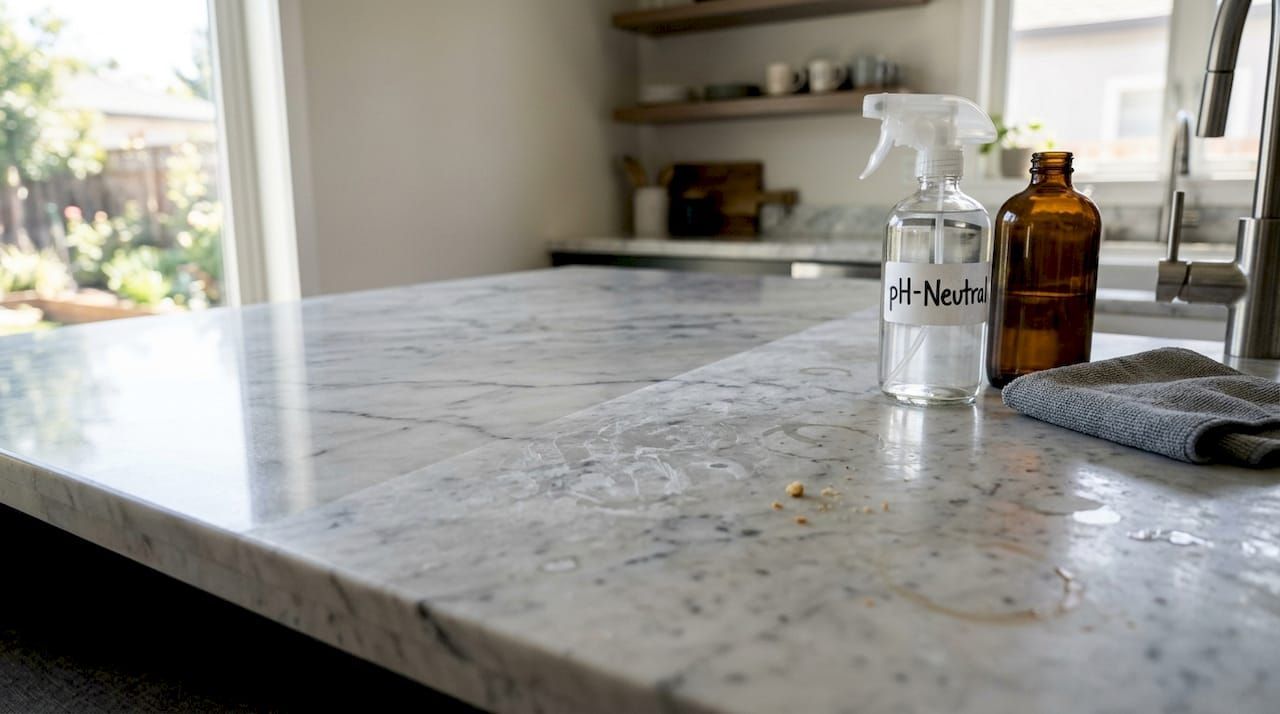
Indoors, the highest-risk areas are marble bathrooms, travertine entryways, and any kitchen surface made from natural stone. These spots get cleaned frequently, which means even a mildly acidic product can cause visible damage within months.
- Shower walls: Soap scum is tempting to tackle with acidic sprays. Use an acid-free alternative to avoid etching grout lines and stone.
- Kitchen countertops: Lemon juice and vinegar are common in kitchens. Keep them off stone surfaces entirely.
- Pool surrounds: Wet surfaces plus acidic cleaners equals accelerated surface wear, especially in direct sunlight.
Pro Tip: If you manage multiple rental properties or a commercial pool, standardize on acid-free products across all surfaces. You'll reduce liability, lower repair costs, and give your surfaces a consistent, well-maintained appearance that tenants and guests notice.
For pool tile cleaner options, choosing the right pH-neutral formula for your tile type makes a significant difference in how long the finish holds up between deep cleans.
Knowing where acid-free cleaning shines, you'll want to compare how these products stack up in real-world use.
How acid-free cleaners compare with acidic solutions
Let's put both approaches side by side so you can make an informed choice for your surfaces and your budget.
| Category | Acid-free cleaners | Acidic cleaners |
|---|---|---|
| Surface safety | Safe on marble, stone, grout, pool tile | Risk of etching, dulling, finish damage |
| Regular use | Yes, suitable for frequent cleaning | No, can cause cumulative damage |
| Eco-friendliness | Typically biodegradable and low VOC | Often harsh, more chemical waste |
| Stain removal power | Strong with correct contact time and agitation | Fast acting on mineral and rust stains |
| Long-term cost | Lower due to preserved surfaces and sealers | Higher due to restoration and resealing needs |
| Pool suitability | Ideal for regular tile and plaster maintenance | Can soften plaster and degrade finishes |
The controlled mechanical approach works. pH and cleaning mechanics together influence results more than acid strength alone. A well-applied acid-free product with a good brush and adequate contact time outperforms a rushed acidic spray on most surfaces.
Acidic cleaners do have a role. Severe calcium scale or rust deposits on pool tile may call for a targeted, one-time acid treatment by a professional. But that's a restoration step, not a routine cleaning choice. For everyday maintenance, acid-free wins on every practical measure.
Comparing sponges and scrubbing tools also matters. Look at acid-resistant sponge options when selecting tools that pair well with acid-free formulas. The wrong applicator can scratch stone surfaces, negating the benefits of a safe cleaner.
For homeowners focused on keeping things looking their best without abrasive shortcuts, the approach to preventing tile stains naturally pairs perfectly with an acid-free routine.
The real reason acid-free cleaning makes sense for modern homes
Here's something most cleaning articles won't tell you: the "stronger is better" instinct is costing homeowners real money. We've seen it repeatedly. A homeowner spends years using vinegar or a citrus spray because it smells fresh and feels natural. Then they wonder why their marble looks flat, their grout keeps darkening, and their pool tile needs professional descaling every season.
The damage wasn't dramatic. It happened gradually, application by application. That's what makes acidic cleaners so deceptive.
The truth is that acid-free cleaning isn't a compromise. It's a more disciplined approach. It requires the right product, the right contact time, and consistent physical action, but the results hold up longer. Professional property managers who commit to acid-free protocols see fewer repair calls, longer intervals between restorations, and surfaces that genuinely hold their value.
Most quick-fix hacks found online focus on immediate visual results, not long-term surface health. Avoiding neutral cleaner mistakes is one of the most underrated things you can do for your home's maintenance record. Get the fundamentals right, and the surfaces take care of themselves.
Upgrade your routine: Smart acid-free cleaning for every surface
Making the switch to acid-free cleaning doesn't have to be complicated. The right products are already formulated, tested, and ready for the exact surfaces you're maintaining.
At Oceancare Store, you'll find pH-neutral cleaners designed specifically for marble, travertine, pool tile, and grout. Every formula is eco-certified, biodegradable, and built to protect finishes rather than strip them. Browse the full range of home essential cleaners to find the right fit for your surfaces, or start with our practical eco-friendly cleaning tips to build a smarter maintenance routine from the ground up. Your stone, tile, and pool surfaces will show the difference.
Frequently asked questions
What does 'acid-free' really mean for household cleaning?
Acid-free cleaners are formulated at a neutral pH, which makes them safe for marble, limestone, travertine, and pool surfaces without causing etching or damage that acidic products leave behind.
Are acid-free cleaners as effective as acidic ones for tough stains?
Yes, when applied correctly. Research confirms that pH and mechanical action together drive cleaning results, meaning acid-free formulas with proper agitation and contact time perform very well on most everyday stains.
Can I use vinegar or lemon to clean stone or tile surfaces?
No. Both are highly acidic and can etch or dull calcite-based stone surfaces like marble and travertine, often causing permanent damage that cannot be reversed without professional treatment.
How can I identify a pH-neutral or acid-free cleaner?
Look for specific language on the product label: "pH-neutral," "safe for marble," or "acid-free formula." When in doubt, check the manufacturer's data sheet or cross-reference with trusted product guides before applying to sensitive surfaces.
What are the long-term benefits of switching to acid-free cleaning?
Over time, consistent acid-free cleaning reduces the need for costly professional restorations, extends the life of sealers and finishes, and keeps stone and pool surfaces looking their best with less effort.
Recommended
- pH Neutral Tile & Stone Cleaner: Daily Care for Hard Surfaces
- 7 Effective Types of Pool Tile Cleaners Explained
- pH Neutral Tile & Stone Cleaner Concentrate: Daily Care for All Surfaces
- Intensive Stone Cleaner Concentrate: Restore Natural Stone Beauty
- Top hardfloor cleaning methods for immaculate results

