
How Cleaning Agents Drive Grout Discoloration
TL;DR:
- Using harsh chemical cleaners like vinegar, bleach, and ammonia damages grout over time by eroding cement and stripping sealants. Routine cleaning with pH-neutral products and resealing every 6 to 12 months prevents discoloration and preserves grout integrity. When grout is chemically damaged or deeply stained, restoration methods such as regrouting or applying colorants are more effective than repeated cleaning.
The role of cleaning agents in grout discoloration is direct: the wrong cleaner chemically damages grout, fades its color, and weakens its structure over time. Acidic agents like vinegar, chlorine bleach, and ammonia all erode the cement binders that hold grout together. pH-neutral cleaners, by contrast, remove stains without attacking the grout itself. Knowing which chemicals to avoid and which to use is the single most effective step you can take to keep grout looking clean and intact for years.

How do different types of cleaning agents affect grout discoloration?
Cleaning agents fall into four categories based on pH and chemical composition, and each one interacts with grout differently. The category you choose determines whether your grout stays intact or slowly deteriorates.
Acidic cleaners (pH below 5) are the most destructive option for cement-based grout. Vinegar, lemon juice, and many commercial tile descalers fall into this group. Acidic cleaners dissolve the lime in cement-based grout, causing erosion of up to 0.5 mm per year. That may sound small, but it adds up fast in high-traffic areas like kitchen floors and shower walls.
Chlorine bleach is the most commonly misused cleaner in homes. It produces a bright white result that looks like progress. The reality is that bleach fades colored grout and weakens its structure within months of regular use. It also strips sealants, leaving grout porous and vulnerable to staining.
Ammonia-based cleaners break down grout sealants with repeated use. Once the sealant is gone, grout absorbs moisture, grease, and pigment from mop water. That absorption is what causes the gray or brown discoloration you see in older tile floors.
Alkaline cleaners serve a legitimate role in cutting through grease and soap scum. The risk with alkaline products is residue. If you do not rinse thoroughly, the residue attracts dirt and causes a gradual darkening of grout lines.
pH-neutral cleaners (pH 6–7) are the safest choice for routine use. pH-neutral cleaners yield 95% stain removal effectiveness and preserve sealant life over six months. That combination of cleaning power and material safety makes them the standard recommendation for daily grout care.
| Cleaner type | pH range | Effect on grout | Best use |
|---|---|---|---|
| Acidic (vinegar, descalers) | Below 5 | Erodes cement binders, causes color loss | Avoid on grout |
| Chlorine bleach | 11–13 | Fades pigment, strips sealant | Occasional use only |
| Ammonia-based | 10–12 | Breaks down sealant, increases porosity | Avoid on sealed grout |
| Alkaline degreasers | 8–10 | Cuts grease but leaves residue | Rinse thoroughly |
| pH-neutral cleaners | 6–7 | Cleans without damage, preserves sealant | Routine maintenance |
Pro Tip: Always check the pH of any new cleaner before applying it to grout. Most product labels list pH, and anything below 6 or above 10 warrants caution on cement-based grout.
What cleaning routines best prevent grout discoloration?
Consistent, gentle cleaning prevents far more discoloration than any single deep-cleaning session. The goal is to stop buildup before it bonds to grout, not to blast it off after the fact.
Weekly cleaning with a pH-neutral tile cleaner is the foundation of any good grout maintenance routine. Apply the cleaner, let it dwell for two to three minutes, then scrub with a soft-bristle brush. Nylon brushes work well. Metal scrubbers scratch grout surfaces and create micro-grooves that trap dirt.
For organic stains like mold, mildew, and food residue, oxygen bleach (sodium percarbonate) cleans without bleaching pigments and is safer for colored grout than chlorine bleach. Mix it with warm water, apply to stained areas, and let it sit for 10–15 minutes before scrubbing. It breaks down organic matter without attacking the grout's color or cement structure.
One overlooked cause of grout discoloration is dirty mop water. Dirty mop water spreads contaminants over grout, causing uniform darkening across an entire floor. Change your rinse water every 100–150 square feet, or use an extraction-style floor cleaner that removes dirty water rather than spreading it.
Sealing is the other half of the equation. Resealing grout every 6–12 months maintains protection against moisture and stain absorption. Unsealed grout is porous and absorbs everything it contacts, including the cleaning products you use on it.
Grout maintenance best practices:
- Clean weekly with a pH-neutral cleaner, not bleach
- Use a soft nylon brush, never metal or abrasive pads
- Treat organic stains with oxygen bleach, not chlorine bleach
- Change mop water frequently to avoid spreading contaminated water
- Reseal grout every 6–12 months with a penetrating sealer
- Wipe up spills immediately before they absorb into grout
- Avoid steam cleaners on older or cracked grout, as heat can widen micro-fractures
Pro Tip: If you use a bucket and mop, fill a second bucket with clean rinse water. Dip the mop into the rinse bucket after each pass, then wring before going back to the cleaning solution. This one habit prevents most uniform grout darkening.
Why do some cleaners cause discoloration despite initial whitening?
Chlorine bleach is the clearest example of a cleaner that looks effective but causes long-term harm. Bleach temporarily brightens grout but breaks down cement binders, causing fading and structural weakening over time. The whitening effect is real but short-lived. The structural damage is permanent and cumulative.
The mechanism behind this is straightforward. Bleach leaves a thin film on grout after it dries. That film is slightly sticky and attracts dirt, which means the grout gets dirty faster after each bleach treatment. Homeowners then clean more frequently with bleach, accelerating the cycle of damage.
Vinegar follows the same pattern from a different angle. It dissolves cement binders on contact. Testers reported visible grout haze and micro-fractures from weekly vinegar sprays over just three weeks. The surface looks clean after each application, but the grout is physically thinner and more porous each time.
Increased porosity has a direct consequence: microbial growth. Porous grout absorbs moisture and organic matter, creating conditions where mold and mildew thrive. That biological growth is a major driver of the dark gray or black discoloration you see in shower grout. The cleaner caused the very problem it was meant to solve.
Common misconceptions vs. reality:
- "Bleach cleans grout deeply." Bleach whitens the surface but does not remove embedded dirt. It masks discoloration temporarily.
- "Vinegar is safe because it's natural." Natural does not mean safe for cement. Vinegar is acidic enough to erode grout with regular use.
- "More scrubbing means better results." Aggressive scrubbing with harsh tools removes grout material and accelerates wear.
- "If it looks clean, it is clean." Bleach residue and eroded surfaces attract more grime within days of cleaning.
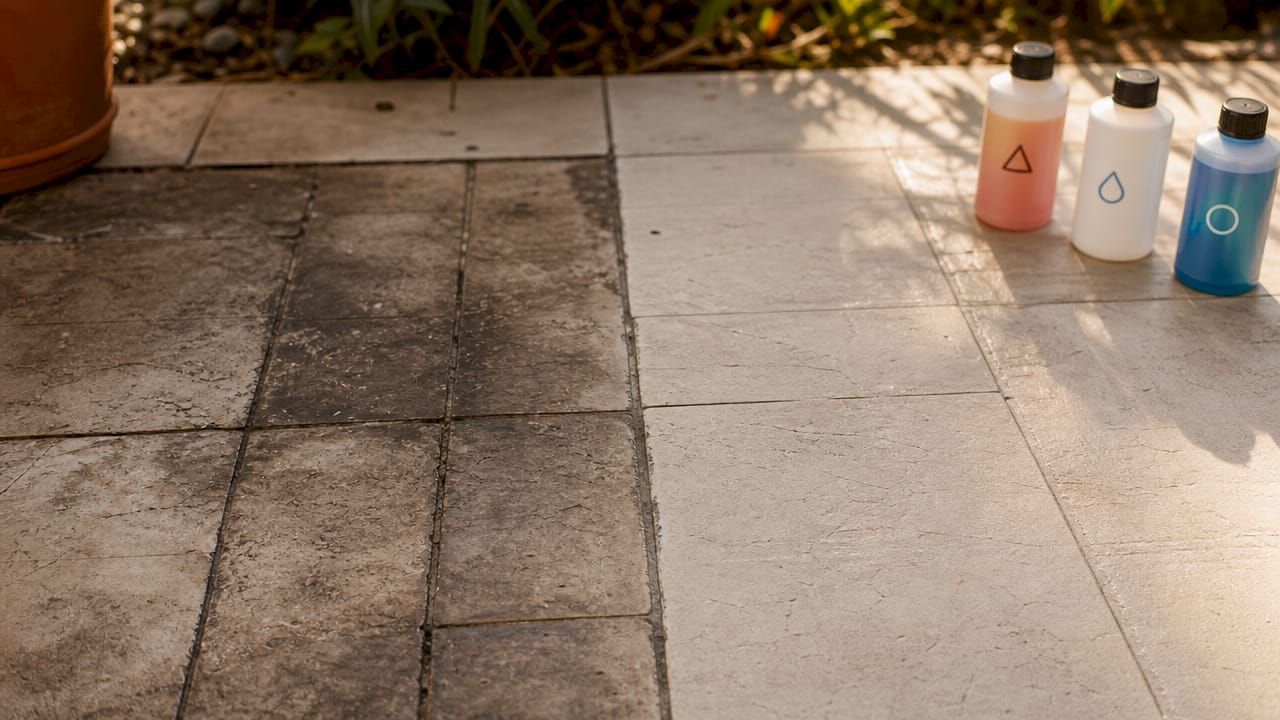
When should you consider grout restoration instead of cleaning?
Cleaning agents have limits. When grout has been chemically damaged for years, no cleaner will restore its original color or structural integrity. Recognizing that point saves you time and prevents further damage from repeated aggressive cleaning attempts.
The signs that you have crossed from a cleaning problem into a restoration problem include: grout that stays dark or discolored after thorough cleaning, grout lines that appear recessed or crumbling, and widespread color inconsistency across a tiled surface. Deep grout discoloration after years of grease and moisture saturation often requires professional deep cleaning, colorants, or regrouting.
| Restoration method | Best for | Relative cost | Longevity |
|---|---|---|---|
| Professional deep cleaning | Embedded stains, surface discoloration | Moderate | 1–3 years |
| Grout colorants | Faded or uneven color on intact grout | Low to moderate | 3–5 years |
| Partial regrouting | Cracked or crumbling sections | Moderate | 10+ years |
| Full regrouting | Widespread structural failure | High | 15+ years |
Grout colorants work best on clean grout in good condition. They seal and recolor simultaneously, making them a practical option for grout that is structurally sound but visually faded. Full regrouting is the last resort, reserved for grout that is cracked, crumbling, or no longer providing a watertight seal.
After any restoration method, sealing is non-negotiable. Grout must cure before sealing, and improper timing traps moisture, which leads to discoloration and bacterial buildup. Follow the manufacturer's cure time before applying any sealer. A penetrating grout sealer applied after restoration protects the investment and delays the next restoration cycle significantly.
For a step-by-step approach to restoring grout without harsh chemicals, the eco-friendly grout restoration guide from Oceancarestore walks through each stage in practical detail.
Key Takeaways
The most effective way to prevent grout discoloration is to use pH-neutral cleaners consistently, reseal every 6–12 months, and avoid chlorine bleach, vinegar, and ammonia entirely.
| Point | Details |
|---|---|
| pH-neutral cleaners are safest | Cleaners with pH 6–7 remove 95% of stains without eroding grout or stripping sealant. |
| Bleach causes long-term damage | Chlorine bleach whitens temporarily but breaks down cement binders and attracts more dirt. |
| Dirty mop water darkens grout | Change rinse water frequently or use extraction tools to avoid spreading contaminants. |
| Reseal every 6–12 months | Regular sealing prevents moisture absorption, bacterial growth, and stain penetration. |
| Restoration beats repeated harsh cleaning | When discoloration is deep, colorants or regrouting outperform any cleaning agent. |
What I have learned from years of watching homeowners clean grout wrong
The most common mistake I see is not using the wrong product once. It is using the wrong product every week for two years because it seems to work. Bleach makes grout look white. Vinegar cuts through soap scum. Both feel like wins in the moment. The damage shows up six months later when the grout is gray, recessed, and crumbling at the edges.
The second mistake is treating grout like tile. Tile is glazed and largely impervious. Grout is porous cement. It absorbs what you put on it. That distinction changes everything about how you should clean.
What actually works is boring: a pH-neutral cleaner, a soft brush, clean rinse water, and a fresh coat of sealer once a year. I have seen bathrooms with 20-year-old grout that looks nearly new because the homeowner followed that routine. I have also seen grout replaced after five years because someone used undiluted bleach weekly.
The deep-clean grout guide from Oceancarestore covers the acid-free approach in detail, and it aligns with what professional tile installers actually recommend. The science on this is settled. Gentle and consistent beats aggressive and frequent every time.
Oceancarestore products for grout care and restoration
Oceancarestore carries a focused range of cleaners and sealers built specifically for grout and hard surface maintenance. Every product in the line is pH-neutral, biodegradable, and formulated to clean without eroding cement-based or natural stone grout.
For routine care, the pH-neutral tile and stone cleaners remove everyday buildup without touching sealant or grout color. For long-term protection, the stone and grout sealers category includes penetrating options that lock out moisture and staining agents for up to 12 months. If your grout has already faded or suffered chemical damage, the pool tile maintenance range includes restoration products suited to both indoor and outdoor surfaces. All products are low VOC and safe for household use.
FAQ
What is the main cause of grout discoloration?
The main cause is repeated use of harsh cleaning agents like chlorine bleach, vinegar, and ammonia, which erode cement binders, strip sealants, and increase grout porosity. Dirty mop water spreading contaminants across grout lines is a close second.
Are pH-neutral cleaners actually effective on tough stains?
Yes. pH-neutral cleaners achieve 95% stain removal effectiveness while preserving sealant life. For organic stains like mold, pairing a pH-neutral cleaner with oxygen bleach handles most cases without damaging grout color.
How often should grout be sealed?
Grout should be resealed every 6–12 months to maintain stain resistance and prevent bacterial growth. Unsealed grout absorbs moisture and contaminants far more readily than sealed grout.
Can bleached or acid-damaged grout be restored?
Yes, but cleaning alone will not fix it. Grout colorants work well on structurally intact grout that has faded. Cracked or crumbling grout requires partial or full regrouting followed by sealing.
Is vinegar safe to use on grout?
No. Vinegar is acidic enough to dissolve cement binders with regular use. Weekly vinegar sprays produce visible micro-fractures within three weeks. Use a pH-neutral cleaner instead.

