
6 Essential Natural Stone Restoration Methods Explained
6 Essential Natural Stone Restoration Methods Explained
Keeping natural stone surfaces in top condition can feel overwhelming when you face dirt buildup, biological growth, stains, and the everyday wear from weather. Simple cleaning techniques that work elsewhere often leave stone vulnerable to worse damage or fail to address the real problem. Restoring and protecting these surfaces calls for careful methods that truly respect both the stone and the environment.
You deserve solutions that solve these issues without risking your stone's natural beauty or safety. The right approach will show you how to remove tough stains, prevent damage from weathering, and select eco-friendly products that actually work. The best part? Each step is clear, manageable, and designed for lasting results—no guessing, no harsh chemicals required.
Get ready to uncover practical, eco-friendly strategies that put control back in your hands. With these proven methods, you'll know exactly how to clean, restore, and protect your natural stone for years to come.
Table of Contents
Quick Summary
| Key Message | Explanation |
|---|---|
| 1. Understand stone problems | Recognize issues like dirt buildup and biological growth to choose effective restoration strategies. |
| 2. Use safe cleaning methods | Always clean with soft brushes and non-toxic solutions to avoid damaging sensitive stone surfaces. |
| 3. Apply biodegradable sealers | Use eco-friendly sealers to protect stone and reduce environmental harm while ensuring lasting safety. |
| 4. Regular maintenance prevents damage | Conduct monthly inspections and cleaning to identify issues early, preventing costly restoration later. |
| 5. Test cleaning methods first | Always test new cleaning approaches on hidden areas to avoid damaging the stone surface. |
1. Understanding Common Natural Stone Problems
Your beautiful natural stone surfaces face constant threats from the environment. Understanding what causes damage is the first step toward effective restoration and long-term protection.
Natural stone deteriorates through two main mechanisms: physical weathering and chemical weathering . Physical weathering breaks stone into smaller pieces without changing its composition, often accelerated by freeze-thaw cycles or root growth. Chemical weathering alters the stone's mineralogy through dissolution or oxidation, fundamentally changing how the surface looks and performs.
Common Issues You'll Encounter
Your stone surfaces likely face one or more of these widespread problems:
- Dirt and grime buildup penetrates stone pores, creating stubborn stains that surface cleaning alone won't remove
- Biological growth such as algae and lichens forms biofilms that retain moisture and produce acids attacking the stone
- Mineral stains from iron deposits create rust-colored marks that are particularly difficult to address
- Chemical weathering from acid rain and environmental pollutants gradually dissolves stone surfaces
- Surface erosion causes the stone to become rough and uneven, compromising both appearance and durability
Dirt buildup represents one of the most deceptive problems because it doesn't just sit on top—it infiltrates the porous structure of natural stone. Once inside, dirt causes difficult stains that regular cleaning cannot reach.
Biological growth is particularly insidious in urban environments where humidity and air pollution create ideal conditions. These organisms don't just discolor your stone; they actively damage it by producing acids that attack the mineral composition.
Understanding these specific problems helps you identify what's affecting your stone and choose the right restoration approach rather than guessing at solutions.
Mineral stains present a unique challenge because they're embedded within the stone itself. Iron oxide stains, common in natural stone, require specialized treatment to break down and remove without damaging the underlying surface.
The good news? Most of these problems are preventable or reversible when you understand their causes. Common stone sealer problems often occur when improper products or application methods trap moisture and accelerate degradation.
Pro tip: Inspect your natural stone surfaces monthly, looking for early signs of discoloration, biological growth, or texture changes—catching problems early makes restoration dramatically easier and less expensive.
2. Safe Cleaning Methods for Sensitive Stone Surfaces
Not all cleaning approaches work for natural stone. Aggressive methods that work on tile or concrete can permanently damage sensitive stone surfaces in minutes.
The key to safe cleaning is using gentle techniques that remove dirt and biological growth without accelerating deterioration. This means choosing the right tools, products, and methods based on your specific stone type.
What Makes a Method Safe
Safe cleaning involves several core principles:
- Soft brushes only such as natural or nylon bristles that won't scratch or gouge the surface
- Water as your primary cleaner for most situations, supplemented by mild non-ionic cleaners when needed
- Avoiding harsh chemicals that dissolve stone or create chemical reactions
- No power washers under any circumstances, as the pressure causes irreversible damage
- Temperature awareness ensuring you clean when temperatures are above 40 degrees Fahrenheit
Water alone is remarkably effective for removing dirt and light organic growth. Many eco-conscious homeowners discover that soft bristle brushes with water handle 80% of their cleaning needs without any additional products.
When water isn't enough, mild non-ionic detergents provide the next step. These cleaners work by loosening dirt without chemically attacking the stone itself. Biocidal cleaners specifically target algae and lichen growth, but should only be used when biological growth is present.
Always test any cleaning method on a hidden or inconspicuous area first to ensure it won't damage your specific stone type.
Wire brushes and power equipment might seem like time-savers, but they create micro-scratches that collect dirt and accelerate weathering. These tools are particularly damaging on softer stones like limestone, sandstone, and marble.
Practical application means matching your method to your stone type. Granite tolerates slightly more aggressive cleaning than marble or limestone. If you're unsure about your stone's composition, err on the side of gentleness.
Respecting cleaning safety guidelines ensures your stone maintains its beauty for decades rather than years. Protective gear including gloves and eye protection should always be used, even with gentle cleaners.
Pro tip: Clean your stone surfaces during mild weather conditions and always allow proper drying time afterward to prevent water from freezing in the pores and causing internal damage.
3. Eco-Friendly Stain Removal Techniques
Stains on natural stone don't require toxic chemicals to disappear. The right eco-friendly approach removes discoloration while protecting your stone and the environment.
Choosing sustainable stain removal means identifying what caused the stain first, then selecting the gentlest effective method. Different stains require different approaches, and using the wrong product wastes time and money.
Stain Types and Eco-Friendly Solutions
Understanding your stain helps you choose the right technique:
- Organic stains like algae, lichen, and mold respond well to water-based cleaning or environmentally friendly biocidal solutions
- Mineral stains from iron oxide or mineral deposits need mild acids or chelating agents that break down deposits
- Oil-based stains require surfactant-based, biodegradable detergents that lift oils without harsh solvents
- Tannin stains from leaves or wood respond to gentle enzyme-based cleaners
- Rust stains benefit from specialized eco-friendly rust removers that target iron oxide
Water-based cleaning handles many organic stains beautifully. When biological growth covers your stone, gentle water solutions combined with soft brushing often removes the growth without additional products.
Biodegradable detergents represent your next step when water alone isn't sufficient. These plant-based cleaners break down naturally, preventing chemical runoff that harms groundwater and nearby vegetation. They work by loosening stain particles rather than dissolving them aggressively.
Testing your chosen method on an inconspicuous area prevents disaster and confirms the technique works for your specific stone type.
Environmentally friendly biocidal solutions target stubborn biological stains while minimizing toxic exposure. Unlike harsh chemical biocides, these solutions break down safely in the environment and don't accelerate stone decay when used properly.
Mineral stains require careful handling because some removal methods can damage sensitive stones. Chelating agents and mild acids should be applied sparingly and always neutralized afterward to prevent chemical weathering.
Preventing stains proves far easier than removing them. Sealing your stone with eco-friendly protectors creates a barrier against stains before they penetrate the surface. Understanding how to prevent tile stains naturally helps you avoid stains altogether in the first place.
Pro tip: Always allow adequate drying time between cleaning steps, as moisture trapped in stone pores can cause new stains or accelerate existing ones, especially during cold weather when freeze-thaw cycles occur.
4. Non-Toxic Polishing and Honing Solutions
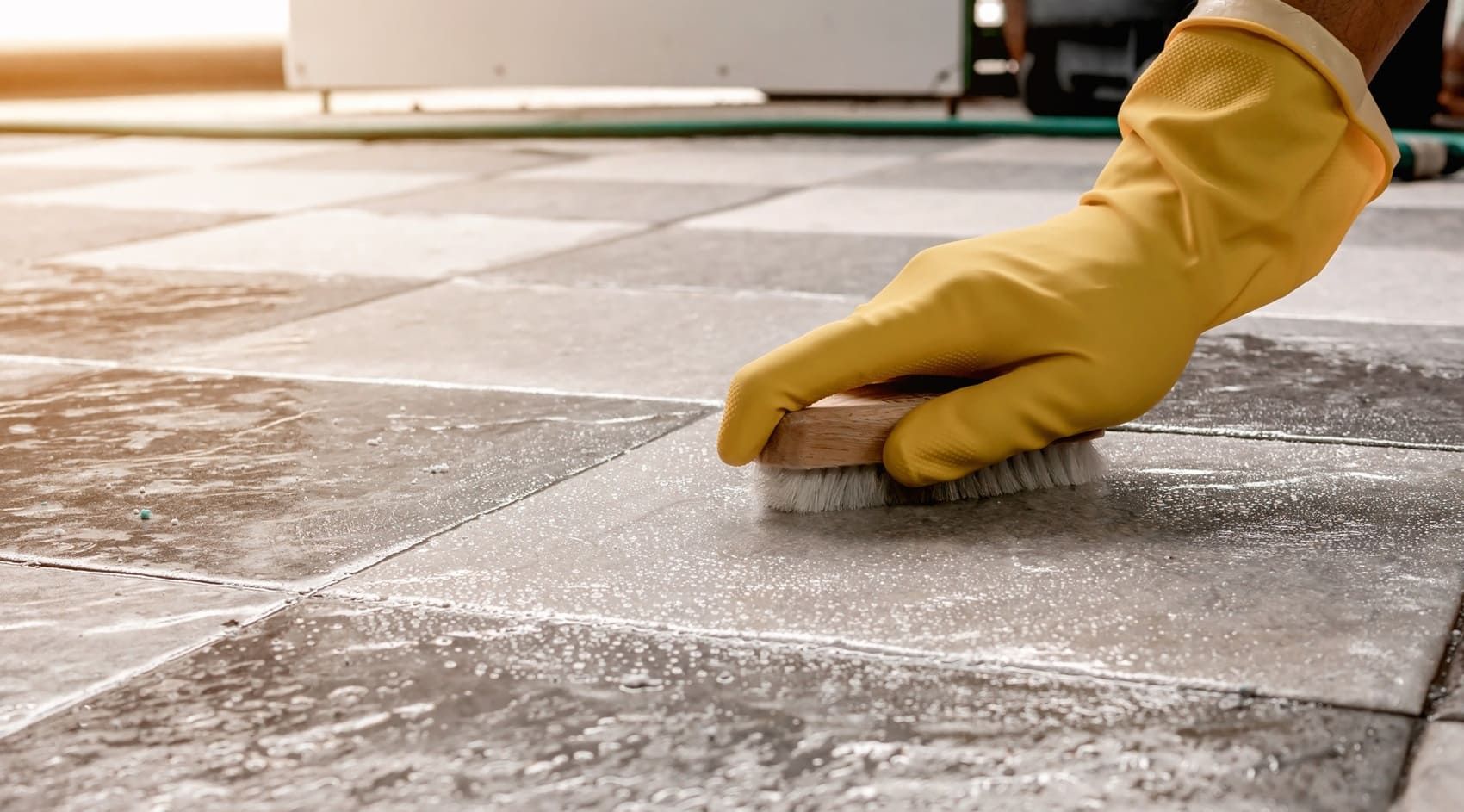
Restoring your stone's natural shine doesn't require harsh chemicals that harm your family or the environment. Modern non-toxic polishing methods deliver professional results while keeping your home safe.
Traditional polishing often involves toxic compounds that create fumes and leave chemical residues. Eco-conscious homeowners are discovering advanced techniques that polish effectively without these health and environmental risks.
Modern Non-Toxic Approaches
Several innovative methods replace conventional polishing:
- Ultrasonic polishing uses high-frequency vibrations and mild abrasive slurry to smooth surfaces gently
- Laser-based photonic methods remove biodeterioration without chemical biocides or damage
- Water-based polishing compounds contain biodegradable ingredients that break down naturally
- Soft abrasive pads with plant-based compounds achieve polish without aggressive chemicals
- Dry mechanical methods combined with soft brushing eliminate the need for toxic solvents
Ultrasonic polishing represents a breakthrough for delicate stone surfaces. This technique involves high-frequency vibrations that smooth surfaces without harsh chemicals or abrasive damage. The process is uniform and precise, ideal for preserving fine details while restoring shine.
Laser technology offers another frontier in non-toxic restoration. Recent research highlights how laser-based photonic methods effectively remove biodeterioration without chemical biocides, preserving stone integrity while achieving professional results.
Water-based polishing compounds work by using biodegradable surfactants rather than petroleum solvents. These compounds lift dirt and oxidation from the stone surface, revealing the natural luster beneath without leaving toxic residues.
Non-toxic polishing methods minimize environmental and health risks while delivering the same professional shine as conventional techniques.
For homeowners with budget constraints, soft abrasive pads combined with eco-friendly polishing compounds offer accessible alternatives. These pads work through gentle mechanical action rather than harsh chemical attack, making them suitable for all stone types.
Dry mechanical methods prove especially valuable for stone in living spaces where chemical fumes pose indoor air quality concerns. Combining soft brushing with specialized compounds prevents chemical exposure while achieving restoration.
Choosing non-toxic cleaners and polishing solutions demonstrates your commitment to sustainable home maintenance. These methods protect your family, preserve your stone's integrity, and reduce your environmental footprint.
Pro tip: Always polish stone surfaces in sections, working in circular motions with consistent pressure, and allow proper drying time between applications to achieve even, professional-looking results.
5. Applying Biodegradable Sealers for Lasting Protection
Sealing your stone protects it from damage while supporting environmental responsibility. Biodegradable sealers create a protective barrier that breaks down naturally without harming ecosystems or leaving toxic residues.
Traditional sealers often contain petroleum-based ingredients that persist in the environment long after application. Biodegradable alternatives offer the same protection while aligning with your eco-conscious values.
How Biodegradable Sealers Work
These innovative products function through two mechanisms:
- Water-repellent barrier formation prevents moisture from penetrating stone pores and causing damage
- Natural ingredient breakdown ensures all components degrade safely without environmental harm
- Pollutant protection shields stone from acid rain, airborne contaminants, and mineral deposits
- Eco-friendly composition uses natural fibers and polymers instead of synthetic chemicals
- Rapid degradation means ingredients break down quickly without leaving harmful residues
Biodegradable sealers protect natural stone by forming a water-repellent barrier. According to EPA guidelines for biodegradability claims, all ingredients must degrade rapidly without leaving harmful residues, ensuring both protection and environmental safety.
The barrier created by these sealers prevents water from infiltrating stone pores, which is critical because water causes freeze-thaw damage, mineral staining, and biological growth. Without this protection, your stone deteriorates faster.
Biodegradable sealers minimize environmental impact while providing durable protection against water and pollutants.
Natural fiber and polymer-based sealers are preferred for stone protection because they prevent environmental harm and wildlife entanglement. These products offer effective temporary protection while maintaining ecological safety throughout their lifecycle.
Application timing matters significantly. Seal your stone during dry weather when temperatures are between 50 and 85 degrees Fahrenheit. This allows the sealer to cure properly and bond with the stone surface.
Understanding why you should seal natural stone helps you make informed decisions about protection. Sealed stone maintains its aesthetic appeal, resists staining, and requires less frequent cleaning.
Most biodegradable sealers require reapplication every one to three years depending on climate and foot traffic. Regular inspection helps you identify when your stone needs fresh protection.
Pro tip: Apply biodegradable sealers in thin, even coats using a brush or sprayer, allowing adequate drying time between applications, and always test on an inconspicuous area first to ensure compatibility with your specific stone type.
6. Routine Care to Prevent Future Stone Damage
Prevention beats restoration every time. Routine maintenance keeps your stone looking beautiful while avoiding costly repairs down the road.
Consistent care prevents dirt, biological growth, and pollutants from accumulating and accelerating deterioration. Small efforts now spare you from major restoration projects later.
Your Stone Care Schedule
Establish these regular practices:
- Monthly inspections identify cracks, erosion, or discoloration before they worsen
- Gentle cleaning with water and soft brushes removes dirt and organic growth
- Spot treatment addresses stains immediately before they set permanently
- Annual sealing maintains your protective barrier against moisture and pollutants
- Weather monitoring helps you address freeze-thaw damage or flood-related issues
Regular gentle cleaning with water and soft brushes prevents the accumulation of dirt and biological growth that accelerates deterioration. This simple practice removes surface contaminants before they penetrate the stone's pores.
Monthly inspections catch problems early when they're easiest to fix. Look for small cracks, color changes, or areas where biological growth is beginning to establish itself.
Early intervention through cleaning, sealing, and repairs prevents irreversible effects and extends your stone's lifespan dramatically.
Spot treatment matters tremendously. When you notice a stain forming, address it immediately using appropriate eco-friendly cleaners. Stains become exponentially harder to remove the longer they sit.
Avoid harsh chemicals, power washers, and abrasive tools that damage stone surfaces. These shortcuts cause more problems than they solve, creating permanent marks that no restoration can fully repair.
Proactive monitoring and maintenance mitigate environmental impacts such as flooding, chemical exposure, and biological colonization. Awareness of natural hazards and preserving surrounding environments helps sustain your natural stone features over time.
Sealing should happen annually in most climates, though high-traffic or harsh-weather areas may need twice-yearly protection. Natural stone sealers provide sustainable protection that prevents water infiltration and stain formation.
Document your maintenance activities. Keep records of cleaning dates, products used, and any issues discovered. This information helps you identify patterns and anticipate future needs.
During extreme weather, take extra precautions. Before heavy freezing, ensure proper drainage around stone surfaces to prevent water from pooling and freezing within pores.
Pro tip: Establish a quarterly deep cleaning routine where you thoroughly inspect your entire stone surface, addressing any issues immediately and resealing as needed, making prevention a scheduled habit rather than an afterthought.
Below is a comprehensive table summarizing the common concerns, methods, and preventive measures for maintaining natural stone surfaces, as detailed in the article.
| Issue/Challenge | Details and Methods | Prevention/Tips |
|---|---|---|
| Physical and Chemical Damage | Physical weathering breaks stones mechanically; chemical weathering alters their mineral structures via reactions. | Regular inspections and protective measures like sealers prevent worsening of such weathering effects. |
| Dirt and Grime Penetration | Dirt infiltrates stone pores, causing stains that standard cleaning cannot address. | Monthly cleaning with water and soft brushes removes dirt before it settles. |
| Biological Growth | Algae and lichens produce acids that damage stone and discolor surfaces. | Maintain surface dryness, and use eco-friendly biocidal cleaning solutions when needed. |
| Mineral Discoloration | Iron staining causes rust-like marks on stone surfaces. | Employ chelating agents sparingly to safely remove stains while preserving stone integrity. |
| Surface Wear and Erosion | Harsh cleaning or environmental factors roughen stone surfaces over time. | Use gentle, stone-appropriate cleaning methods and avoid harsh abrasives. |
| Eco-Friendly Sealing | Biodegradable sealers provide a protective water-repellent barrier, reducing pollutant damage. | Seal during optimal weather for proper curing and maintain sealing as recommended based on conditions. |
| Routine Maintenance | Scheduled care prevents significant repair needs and prolongs the surface's beauty. | Establish inspection and cleaning routines tailored to the stone type and its environment. |
Protect and Restore Your Natural Stone with Eco-Friendly Solutions
You have learned the importance of gentle cleaning techniques and biodegradable sealers to effectively restore and protect your natural stone surfaces. The challenge is preventing permanent damage caused by dirt buildup, biological growth, mineral stains, and weathering. At
Oceancare Store, we understand the frustration of trying to maintain your stone's beauty while guarding against harsh chemicals and environmental harm. Our range of plant-based, low VOC cleaners and sealers gives you the power to care for your stone safely and sustainably without compromising performance.
Start protecting your valuable natural stone today with our expert selection of eco-friendly products. Whether you need gentle cleaners to remove stubborn grime and biofilms or durable biodegradable sealers that block moisture and stains, you will find solutions tailored to your specific needs. Visit Oceancare Store now and experience peace of mind knowing your stone restoration and maintenance is in environmentally responsible hands. Begin your path to lasting stone beauty and durability with trusted products designed for sensitive surfaces and conscious homeowners.
Frequently Asked Questions
What are the common issues I should look for in natural stone surfaces?
Natural stone surfaces can experience issues like dirt and grime buildup, biological growth such as algae, mineral stains, and chemical weathering. Regularly inspect your stone for early signs of discoloration or texture changes to identify and address these problems quickly.
How can I safely clean my natural stone surfaces?
To clean natural stone safely, use soft brushes with water as your primary cleaner, avoiding harsh chemicals and power washers. Clean your stone surfaces gently at least once a month to maintain their appearance and prevent damage over time.
What eco-friendly options are there for removing stains from natural stone?
Eco-friendly solutions for stain removal include using water-based cleaning methods, biodegradable detergents, and enzyme-based cleaners for specific stains. Apply these techniques immediately upon noticing stains to achieve the best results, as early intervention is key.
How do I choose the right sealer for my natural stone?
Select a biodegradable sealer that forms a water-repellent barrier while breaking down safely in the environment. Apply the sealer during dry weather and ensure proper coverage to protect your stone effectively from moisture and pollutants.
What routine maintenance should I perform to prevent natural stone damage?
Perform monthly inspections and cleaning, with annual sealing of your stone surfaces. Establish a consistent care routine to identify and address issues early, ensuring your stone remains beautiful and lasts longer.
How often should I reapply sealers to my natural stone surfaces?
Reapply sealers every one to three years, depending on your stone's exposure and traffic levels. Regularly check your stone for signs of wear to determine when it needs fresh protection.
Recommended

